Electricity price formation
Module 6Lection 4
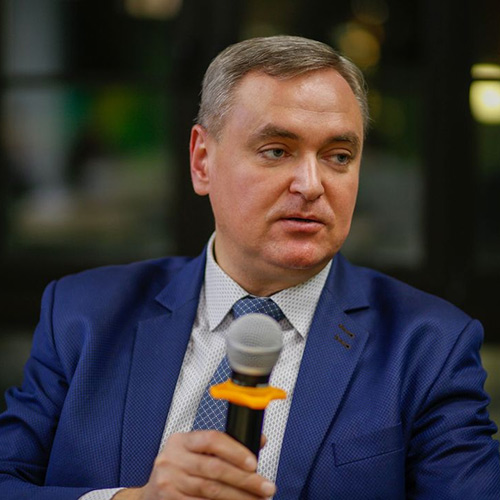
Dmytro Olefir – Junior Research Fellow at the Institute of Electrodynamics of the National Academy of Sciences of Ukraine, expert in energy systems management and electricity market functioning, Deputy Director of Balancenergo LLC – optimization of the strategy for working in the electricity market, coordination of equipment modernization work, coordination of work on creating an aggregated group, participation in the GTU+BESS innovation project. Deputy Director of Energy Trade Group LLC – organized a business process for exporting/importing electricity, built models for distributed generation and BESS construction projects. Manages projects for automating BESS management and organizing an aggregated group for working in the electricity market.
Has several higher educations: diploma with honors in MBA – Institute of Business Education, Kyiv National Economic University of Ukraine named after V. Hetman; postgraduate studies in the specialty “Power Plants and Power Systems”, National Technical University of Ukraine (Kyiv Polytechnic Institute), diploma with honors in the specialty “Automation of Electrical Systems Control”, qualification as an electrical engineer – National Technical University of Ukraine (Kyiv Polytechnic Institute); bachelor’s degree in “Electrical Engineering”, NTUU (Kyiv Polytechnic Institute).
In 2022-2024 – member of the Supervisory Board of PrJSC “Zaporizhtransformator”. Restored the efficiency and profitability of the enterprise, developed proposals for the operation and development of the plant under martial law, improved corporate governance, control of the implementation of the Financial Statements and other documents.
In 2023 – member of the board of directors of PJSC “Centrenergo”. Implemented a new trading strategy in various segments of the electricity market and effective planning.
In 2022-2023 – Chairman of the Supervisory Board of JSC “Market Operator”. Approved the executive body in accordance with the current regulatory framework of Ukraine and the Charter of the Company, approved the financial plan of the Company for 2023 and conducted an audit.
In 2021-2022, as an advisor to the General Director of JSC “Market Operator”, he developed proposals to improve the company’s work in the conditions of synchronization of the Unified Energy System of Ukraine with ENTSO-E.
As a member of the NSDC working group, he developed an action plan to overcome threats in the energy industry.
From 2018 to 2021, he headed the commercial department of PrJSC “Ukrhydroenergo”. He had the right to sign financial documents in the electricity market. In a short time, he organized the commercial activities of PrJSC “Ukrhydroenergo” in the new electricity market (recruitment, software, regulations for interaction with divisions, finalization of the regulatory framework for the operation of the electricity market (interaction with the National Commission for the Regulation of Energy and Utilities of Ukraine, NEC “Ukrenergo”, Ministry of Energy, Cabinet of Ministers of Ukraine, JSC “Market Operator”, LLC “UEB”, market participants, USAID).
In 2021, according to the results of the competition, by order of the Cabinet of Ministers of Ukraine, he was approved for the position of a member of the Board of Directors of NEC “Ukrenergo”.
He has experience in cooperation with the American company GESS Ukraine. He prepared a Feasibility Study for the reconstruction of the Kherson CHPP with its conversion to biogas operation.
2014-2023 – Corresponding Member of the Academy of Technological Sciences of Ukraine. He participated in the activities of the Academy of Technological Sciences of Ukraine, is the author of scientific and practical articles, reports at energy forums, and developed a proposal for the implementation of international standards in in the field of power systems management and information support in the power sector of Ukraine, the functioning of the electricity market.
In 2013 – 2021 – an individual member of the NGO “CIGRE-Ukraine”, its presentations at the international level.
Has many years of experience in interacting with the National Commission for the Regulation of Energy and Power Generation of Ukraine, the Ministry of Energy, the Cabinet of Ministers of Ukraine, the World Bank, research institutes, USAID, generating companies and DSOs, European TSOs and SOs of the CIS and Baltic countries, international and Ukrainian consulting companies, international software developers, experience in scientific and teaching activities, management of large teams (over 2.5 thousand employees); impeccable business reputation; significant experience as a risk manager.
Lecture content:
- Regulatory and legislative framework for pricing
- Electricity market segments
- Pricing mechanisms
- Market features
- Electricity generation
- “Green” electricity tariffs
- PSO mechanism for “green” generation
- Transmission, distribution and dispatching tariffs
- Electricity suppliers
- Problems and prospects
- Active links (NPAs, standards, resources)
- Glossary
- Self-test questions
1. Regulatory and legislative framework for pricing
Electricity pricing in Ukraine is established in accordance with laws, by-laws and codes that regulate the operation of the energy market. Main documents:
- Law of Ukraine “On the Electricity Market”;
- Law of Ukraine “On Alternative Energy Sources”;
- Law of Ukraine “On Amendments to Certain Laws of Ukraine on the Restoration and “Green” Transformation of the Energy System of Ukraine”;
- Market Rules (NCRECP No. 307, 2018);
- Rules of the Retail Electricity Market (NCRECP No. 312, 2018);
- Rules of the Day-Ahead and Intraday Markets (NCRECP No. 308, 2018);
- Regulations on Special Obligations (SDO) to Ensure General Public Interests (CMU No. 483, 2019);
- Codes of the Transmission, Distribution and Commercial Accounting System (NKREKP No. 309–311, 2018).
These documents define the rules of trade, the procedure for tariff formation, the conditions of operation of market participants and price regulation mechanisms.
2. Electricity market segments
Segments of the Ukrainian electricity market
- The wholesale market is the main space for buying and selling electricity between producers, traders and suppliers. It includes several segments:
- The market for bilateral contracts (UEB, Ukrainian Energy Exchange) – 67–70% of the total volume of electricity traded. These are direct long-term agreements between producers and suppliers (or large consumers).
- Day-ahead market (DAM, administrator – JSC “Market Operator”) and Intraday market (IDM) – 26–28%. Here, participants buy and sell electricity with delivery the next day or within the day.
- Balancing market (BM, administrator – NPC “Ukrenergo”) – 3–4%. It serves to balance production and consumption in real time.
- The ancillary services market (Ukrenergo NPC) is a mechanism for ensuring the stability and reliability of the power system (capacity reserves, frequency regulation, etc.).
- The retail market is direct contracts between end consumers (households, businesses, budget institutions) and electricity suppliers or producers of distributed generation.
Features of the Ukrainian market
Although the market was created on the basis of European directives and standards, it has retained its specific features, in particular, a high concentration of producers and regulatory influence of the state.
The price indicator is the day-ahead market (DAB).
- The share of the DAM is less than a third of the total volume of electricity.
- However, it is the DAM that determines the price benchmarks for all other segments.
3. Pricing mechanisms
Price indicators on the electricity market
In Ukraine, the indicator (benchmark) for all segments is the day-ahead market (DAM). Although its share is only about a quarter of the total trading volume, it is the prices on the DAM that set the tone for the balancing market, the intraday market, and bilateral contracts.
In Europe (ENTSO-E), the benchmark is the weighted average hourly prices of all market segments or the bilateral contract market. That is, in the EU the approach is more comprehensive, while in Ukraine it is spot-based.
Price-caps
Regulatory basis: Resolution of the National Commission for the Regulation of the Energy and Utilities Commission of Ukraine No. 1976 dated 25.11.2024.
On the day-ahead market (DAM) and the intraday market (IDM):
- 00:00–07:00, 11:00–17:00 – up to 5,600 UAH/MWh
- 07:00–11:00, 23:00–24:00 – up to 6,900 UAH/MWh
- 17:00–23:00 – up to 9,000 UAH/MWh
- Minimum price – 10 UAH/MWh
On the balancing market (BM):
- 00:00–07:00 – up to 6,600 UAH/MWh
- 07:00–17:00, 23:00–24:00 – up to 8,250 UAH/MWh
- 17:00–23:00 – up to 10,000 UAH/MWh
- Minimum price – 0.01 UAH/MWh
4. Market Features
Electricity producers are active participants in all market segments:
- Bilateral Contract Market (BCM) – sale of large volumes under pre-agreed terms;
- Day-Ahead Market (DAM) – determines the price indicator for the entire system;
- Intraday Market (IDM) – adjustment of imbalances during the day;
- Balancing Market (BM) – a mechanism for equalizing the system, where prices may be the highest.
Thus, the producer can distribute its volumes between different segments, choosing the most favorable sales conditions.
- The Balancing Market (BM) is often called a “whip market”, as it punishes the parties responsible for imbalances.
- On the BM, the price can be determined by:
-
- the most expensive power unit in the system;
- the cost of importing electricity.
- DAM + VDM act as a “lifeline” for market participants – here you can buy or sell additional volume to avoid imbalances.
- For the parties responsible for balance, DAM prices directly affect the calculation of imbalances (positive or negative).
5. Electricity generation
Electricity generation is an activity that involves the conversion of energy from natural, fossil or renewable resources into electricity using technical means.
Important: production does not include energy storage activities (accumulation, battery systems, etc.).
Sources of production can be:
- Traditional: thermal, nuclear, hydropower;
- Renewable (RES): solar, wind, bioenergy, small hydropower.
6. “Green” electricity tariffs
The “Green” tariff is a special mechanism for state support for producers of electricity from renewable sources (RES). It provides for the mandatory purchase of all produced “green” energy at a fixed, increased price determined by the regulator (the National Commission for the Regulation of Energy and Utilities of Ukraine).
Main regulatory documents:
- Resolution of the National Commission for the Regulation of the Energy and Utilities of Ukraine No. 2420 dated 30.12.2024 – establishes “green” tariffs and surcharges for the use of Ukrainian-made equipment for business entities.
- Resolution of the National Commission for the Regulation of the Energy and Utilities of Ukraine No. 2421 dated 30.12.2024 – determines tariffs for generating installations of consumers (including energy cooperatives) with a capacity ≤ 150 kW.
- Resolution of the National Commission for the Regulation of the Energy and Utilities of Ukraine No. 2422 dated 30.12.2024 – regulates tariffs for private households.
Who can use the “green” tariff?
- Large producers of RES (solar, wind, biopower plants);
- Small consumer installations (up to 150 kW), including cooperatives;
- Private households with their own solar or wind power plants.
Features of the “green” tariff:
- Fixed price for electricity, significantly higher than the market price.
- Guaranteed purchase of all generated energy by the State Enterprise “Guaranteed Buyer.”
- Additional surcharges for the use of Ukrainian-made equipment.
- Limited validity period (depending on legislative changes and the gradual transition to the auction system).
7. PSO mechanism for “green” generation
Electricity producers from renewable sources sell electricity to the State Enterprise “Guaranteed Buyer”. If the “Guaranteed Buyer” does not have enough funds to compensate for the “green” tariff to RES producers, the delta is charged to the tariff of NPC “Ukrenergo”. This subsequently affects the transmission tariff and, accordingly, is reflected in the dispatching tariff.
In addition, part of the electricity, as they say, “goes into the ground”, because a lot of solar generation has been built, it must be limited by the system operator. At the same time, all electricity planned by producers from renewable sources must be paid for at the “green” tariff. This is the so-called “payment for air”. Such a mechanism must be excluded, because it distorts pricing and leads to the bankruptcy of both “Ukrenergo” and the “Guaranteed Buyer”.
To cover the PSO for “green” generation, NPC Ukrenergo is forced to take out loans and issue Eurobonds. Currently, Ukrenergo is in technological default on payments for “green” bonds. This entails an increase in the tariff for electricity transmission and, as a result, leads to an increase in the cost of electricity.gy for industrial consumers and periodically for households.
This is a very bad trend that reduces the competitiveness of Ukrainian consumers relative to international ones.
8. Tariffs for transmission, distribution and dispatching
Tariffs for transmission, distribution and dispatching directly affect pricing in the electricity market.
To transmit electricity from power plants to distribution networks, transmission system networks are used – this is a voltage class of 220 kV and above, as well as interstate power transmission lines. They are managed by the transmission system operator – NEK “Ukrenergo”.
Distribution networks, through which electricity is distributed to end consumers, can be used by distributed generation to supply electricity to end consumers.
An electricity transmission tariff is established for the operation of these networks. It is determined annually by a resolution of the National Commission for the Regulation on Currently, by the resolution of the National Commission for the Energy and Utilities of Ukraine No. 2200 dated December 19, 2024, the following tariffs for electricity transmission services have been approved for NPC Ukrenergo:
- for system users (except for “green” electrometallurgy enterprises) – 686.23 UAH/MWh (excluding VAT);
- for “green” electrometallurgy enterprises – 359.55 UAH/MWh (excluding VAT).
Electricity distribution tariffs
Electricity distribution tariffs are also approved by the resolutions of the National Commission for the Energy and Utilities of Ukraine No. 2200. All documents can be found on the regulator’s website.
The tariff size depends on the voltage class to which consumers are connected.
According to the resolution of the National Commission for the Regulation of the National Energy and Power Sector of Ukraine No. 1430 dated 25.08.2021:
- Voltage class 1 are consumers who receive electricity from the distribution system operator at the balance sheet boundary with a nominal voltage of 27.5 kV and above, or connected to the power plant buses (except for producers from alternative sources).
- Voltage class 2 are consumers who receive electricity at the balance sheet boundary with a nominal voltage below 27.5 kV.
Dispatching tariff
The dispatching tariff, i.e. for dispatching (operational and technological) management services, is also approved annually for NEC Ukrenergo by resolutions of the National Energy and Power Sector of Ukraine.
For 2025, the Resolution of the National Commission for the Regulation of the National Energy and Power Sector of Ukraine No. 2201 dated 19.12.2024 set the tariff at 98.97 UAH/MWh (excluding VAT).
This tariff is paid by electricity producers and distribution system operators.
Cross-subsidization through dispatching
To repay the debt to “green” generation, a special Law of Ukraine was adopted. It allowed the unused funds of NPC “Ukrenergo” for dispatching for previous periods to be redirected to payments to producers at the “green” tariff.
In fact, a situation has arisen where electricity producers subsidize “green” generation. That is, the state-owned company NEK “Ukrenergo”, which itself produces electricity from renewable sources, is forced to finance the same producers from the RES sector through an inflated dispatching tariff.
This mechanism is non-market and should be regulated in the near future, because the system operator should not bear such a burden and create distortions in pricing on the electricity market.
At the same time, the distribution system operators transfer the dispatching fee through their tariff to the end consumer.
9. Electricity suppliers
Electricity suppliers are market participants who sell and resell electricity in accordance with the Law of Ukraine “On the Electricity Market”.
They form their purchasing portfolio, focusing on different market segments:
- bilateral contract market,
- day-ahead market (DAB),
- intraday market (IDM),
- balancing market,
- deals with traders.
Usually, suppliers purchase large volumes of electricity from producers at a fixed price. However, since the supply to the consumer is not equal to the base load, but varies hourly, there is a need to select a resource for a specific schedule.
Possible options for purchasing a resource:
- on the exchange from producers who place block positions – usually without the possibility of adjusting the schedule;
- from a trader under a bilateral agreement – usually with the possibility of adjusting the schedule;
- on the exchange as a buyer of an individual schedule – usually without the possibility of adjusting;
- on the DAM – here you need to clearly understand the principles of price formation, the state and volume of the market.
Price formation mechanisms in supply contracts
In electricity supply contracts, the supplier can use various mechanismsPayment methods:
- Fixed price
- A single price is set for 1 MWh, which is valid throughout the entire supply period.
- Convenient for forecasting costs.
- Risk for the supplier in the event of an increase in market prices.
- Formula pricing
- Tied to market indicators, for example:
- to prices on the day-ahead market (DAB) — formats DAB+ or DAB-, i.e. the cost is equal to the average market with an adjustment in the higher or lower direction;
- to weighted average prices in all market segments plus/minus a certain percentage.
- More flexible reflects the market situation.
- The disadvantage is the difficulty of predicting final costs for the consumer.
Thus, fixed price is more suitable for stability and budget planning, while formula allows you to quickly take into account market fluctuations, but adds risks for both the supplier and the consumer.
Purchase of electricity by the supplier
Electricity suppliers form their portfolios using different approaches to price and supply schedule.
- Fixed price
- The price for 1 MWh is the same for each hour of the day for the entire supply period.
- This is convenient for forecasting costs, but risky for the supplier if market prices increase sharply.
- Formula price
- Tied to the results of trading on the day-ahead market (DAM).
- Changes daily and hourly.
- Most often used in the prepayment format: first, payment is made at the base (fixed) price, and then the cost is adjusted in accordance with the actual prices on the DAM.
- Currently, the practice of using a price with a discount from the DAM is widespread.
- Adjustments can be made with different periodicity: daily, every ten days or monthly – depending on the agreements.
- Supply schedules
- Base load (base): the same amount of electricity every hour of the day throughout the supply period.
- Individual schedule: the amounts can be different for each hour and each day of supply. This option is more flexible, but requires more accurate forecasting of consumption.
Formation of the actual price for electricity
The actual price for the consumer consists of several components that the supplier must take into account in its calculations.
- Electricity purchase price (Purchase price) — is formed depending on which market segments the supplier purchased the resource (bilateral contracts, DAM, VDR, balancing market).
- Supplier profitability ratio (Ppost) — a markup or margin that the supplier adds to the purchase price. It can be fixed or variable.
- Transmission tariff (TP) is a regulated payment established by the National Regulatory Commission for Energy and Power Generation (NREC Ukrenergo) and paid to the transmission system operator (NEC Ukrenergo).
- Distribution tariff (TP) is a regulated payment in favor of the distribution system operator, depending on the voltage class to which the consumer is connected.
Formula:
Tfact=Tkup×Ppost+TP+TP
where:
• Tkup is the actual purchase price of electricity;
• Ppost is the supplier’s profitability ratio;
• TP is the transmission tariff;
• TP is the distribution tariff.
- VAT is charged in accordance with the Tax Code of Ukraine.
Additionally, the cost may include:
- imbalance costs,
- trader services,
- banking or insurance costs (if they are part of the transaction).
Usually, prepayment is more profitable for the consumer: the price in this case may be lower than when paying “after the fact”.
Electricity imbalances
Planned consumption schedules that the consumer forms in advance are almost never fully adhered to in practice. This is due to the unpredictability of production, technological features of enterprises or the behavior of household consumers.
This gives rise to the phenomenon of electricity imbalances.
- Negative imbalance – when the consumer actually used more electricity than planned.
- Positive imbalance – when consumption turned out to be less than planned.
The calculation of imbalances is carried out in accordance with the balancing market rules. The cost of imbalances is directly tied to prices on the day-ahead market (DAM). Thusm, although the RDN covers less than a third of the total volume of electricity, its prices indirectly affect the balancing market and the financial results of market participants.
In essence, the imbalance calculation mechanism should discipline the parties responsible for the balance and stimulate more accurate forecasting of their own consumption.
Universal Service Providers (USP)
A separate type in the electricity market is universal service providers.
Their main task is to ensure the supply of electricity to any consumers, but primarily to household consumers and small non-household consumers (these are enterprises with small electricity consumption).
- For household consumers, electricity is supplied at a fixed tariff, which already includes the cost of distribution.
- For small non-household consumers, contracts may establish both fixed and formula prices, depending on the terms of the contract.
Tariffs for universal service providers are approved by resolutions of the National Commission for the Regulation of Energy and Utilities and are mandatory.
Supply of electricity to household consumers
Supply of electricity to household consumers is regulated by Resolution of the Cabinet of Ministers of Ukraine dated June 5, 2019 No. 483 “On approval of the Regulation on imposing special obligations on electricity market participants to ensure general public interests in the process of functioning of the electricity market.”
This document establishes fixed prices for household consumers. The cost depends on:
- the consumer’s availability of electric heating;
- the type of electricity metering (single-zone, dual-zone or three-zone meter).
Thus, household consumers have different tariff options depending on the connection and metering conditions.
Compensation mechanism and differentiated tariffs
A mechanism for compensating for the difference in cost between the tariff for household consumers and market prices operates in Ukraine. This allows maintaining stable prices for the population, even when there are fluctuations in the electricity market.
Important: electricity metering directly affects the formation of tariffs and the operation of the energy system as a whole.
This is enshrined in CMU Resolution No. 483 of June 5, 2019.
Types of metering:
- Single-zone metering – fixed price, regardless of the time of day.
- Two-zone metering (night/day)
▪ 0.5 of the fixed price during the hours of night minimum load of the power system (from 23:00 to 07:00);
▪ full fixed price during the other hours of the day. - Three-zone metering (night/semi-peak/peak)
▪ 1.5 of the fixed price during the hours of maximum load (from 08:00 to 11:00 and from 20:00 to 22:00);
▪ full fixed price during the half-peak period (from 07:00 to 08:00, from 11:00 to 20:00, from 22:00 to 23:00);
▪ 0.4 of the fixed price during the hours of night minimum load (from 23:00 to 07:00).
To implement hourly metering, “smart meters” should be used. This allows consumers to shift their consumption to those hours when there is a surplus of electricity and lower prices.
Supplier of last resort (SRU)
Supplier of last resort (SRU) is a specially designated electricity supplier in accordance with the Law of Ukraine, which does not have the right to refuse a consumer to conclude an electricity supply contract for a limited period of time, even in difficult cases.
How it works:
- If a consumer-debtor does not settle with the current supplier, he contacts the distribution system operator and the PON.
- Then the consumer is automatically transferred to supply from the PON.
- Payment for electricity for such consumers is made at balancing market prices – they are significantly higher than in regular contracts.
Criticality of the situation:
Currently, the PON’s debt on the balancing market is about 12 billion UAH.
What the state is doing:
- The Law of Ukraine “On Amendments to Certain Laws of Ukraine in the Spheres of Energy and Heat Supply Regarding the Improvement of Certain Provisions Related to Conducting Economic Activities and the Effect of Martial Law in Ukraine” has been adopted.
- It enshrines provisions for the regulation of such situations.
- However, currently the by-laws are in the development stage, so the law has not yet been fully implemented.
Retail Electricity Market
Consumer Rights
According to clause 1, part 1, article 58 of the Law of Ukraine “On the Electricity Marketergy”, the consumer has the right:
- to purchase electricity for his own consumption under bilateral agreements;
- to participate in organized market segments subject to the conclusion of the necessary agreements;
- to purchase electricity on the retail market from electricity suppliers, or directly from producers of distributed generation.
Bilateral electricity supply agreement
Key elements of such an agreement:
- Subject of the agreement is the supply of electricity.
- Price of electricity, determined in monetary units.
- Volume of electricity and hourly volume schedules of purchase and sale.
- Terms and procedure electricity supply.
- Procedure for notifying the contractual volumes of purchase and sale.
- Procedure and form of settlements between the parties.
- Terms and procedure for drawing up acts of acceptance and transfer of electricity volumes.
- Rights, obligations and responsibilities of the parties.
- Term of the contract.
Thus, the retail electricity market creates flexible opportunities for the consumer: from working with suppliers and traders to direct contracts with producers, including small generation facilities.
10. Problems and prospects
Problems of Ukrainian pricing and prospects for reforms
The Ukrainian model of pricing in the electricity market today does not correspond to global practices.
Even at the stage of adoption of the Law of Ukraine “On the Electricity Market”, amendments were made to it that partially violated the basic requirements of the law itself:
prices were to be:
- competitive;
- non-discriminatory in relation to all participants;
- determined according to market rules.
However, in practice:
- certain electricity producers received preferences, which distorted competition;
- manipulations are observed on the day-ahead market (DAM), which affect prices in all other segments:
-
-
- bilateral agreements,
- balancing market,
- intraday market.
Future steps
- Abolition of price caps – in the long term, will allow prices to be formed according to real market mechanisms.
- Implementation of REMIT (Regulation on Wholesale Energy Market Integrity and Transparency) in accordance with European legislation:
-
- will ensure transparency,
- minimize manipulation,
- create conditions for the gradual abandonment of administrative price restrictions on the DAM and the balancing market.
This means that the Ukrainian market should gradually approach the European rules of the game, where the main the regulators are demand and supply, not imposed restrictions.
Active links
- Law of Ukraine “On the Electricity Market” (Vedomosti Verkhovnoi Rada (VVR), 2017, No. 27-28, Art. 312): https://zakon.rada.gov.ua/laws/show/2019-19#Text
- Law of Ukraine “On Alternative Energy Sources” (Vedomosti Verkhovnoi Rada of Ukraine (VVR), 2003, No. 24, Art. 155): https://zakon.rada.gov.ua/laws/show/555-15#Text
- Law of Ukraine “On Amendments to Certain of the laws of Ukraine on the restoration and “green” transformation of the energy system of Ukraine” (Vidomosti Verkhovnoi Rada (VVR), 2023, No. 82, p. 301): https://zakon.rada.gov.ua/laws/show/3220-20#Text
- On approval of the Market Rules (Resolution of the National Commission for the Regulation of the Energy Sector of Ukraine No. 307 dated 14.03.2018) https://zakon.rada.gov.ua/laws/show/v0307874-18#Text
- Rules of the Retail Electricity Market (Resolution of the National Commission for the Regulation of the Energy Sector of Ukraine No. 312 dated 03/14/2018): https://zakon.rada.gov.ua/laws/show/v0312874-18#Text
- Rules of the day-ahead and intraday markets (NKRECP No. 308, 2018): https://zakon.rada.gov.ua/laws/show/v0308874-18#Text
- CMU Resolution No. 483 of 06/05/2019 “On approval of the Regulation on imposing special obligations on electricity market participantsto ensure general public interests in the functioning of the electricity market“: https://zakon.rada.gov.ua/laws/show/483-2019-%D0%BF#Text
- Codes of the National Commission for the Regulation of Energy and Power Generation (14.03.2018):
-
- Code of the Electricity Transmission System (№309): https://zakon.rada.gov.ua/laws/show/v0309874-18#Text
- Code of the Distribution System (№310): https://zakon.rada.gov.ua/laws/show/v0310874-18#Text
- Commercial Accounting Code (No. 311): https://zakon.rada.gov.ua/laws/show/v0311874-18#Text
-