Біоенергетика та альтернативні види палива
Module 4Lection 5
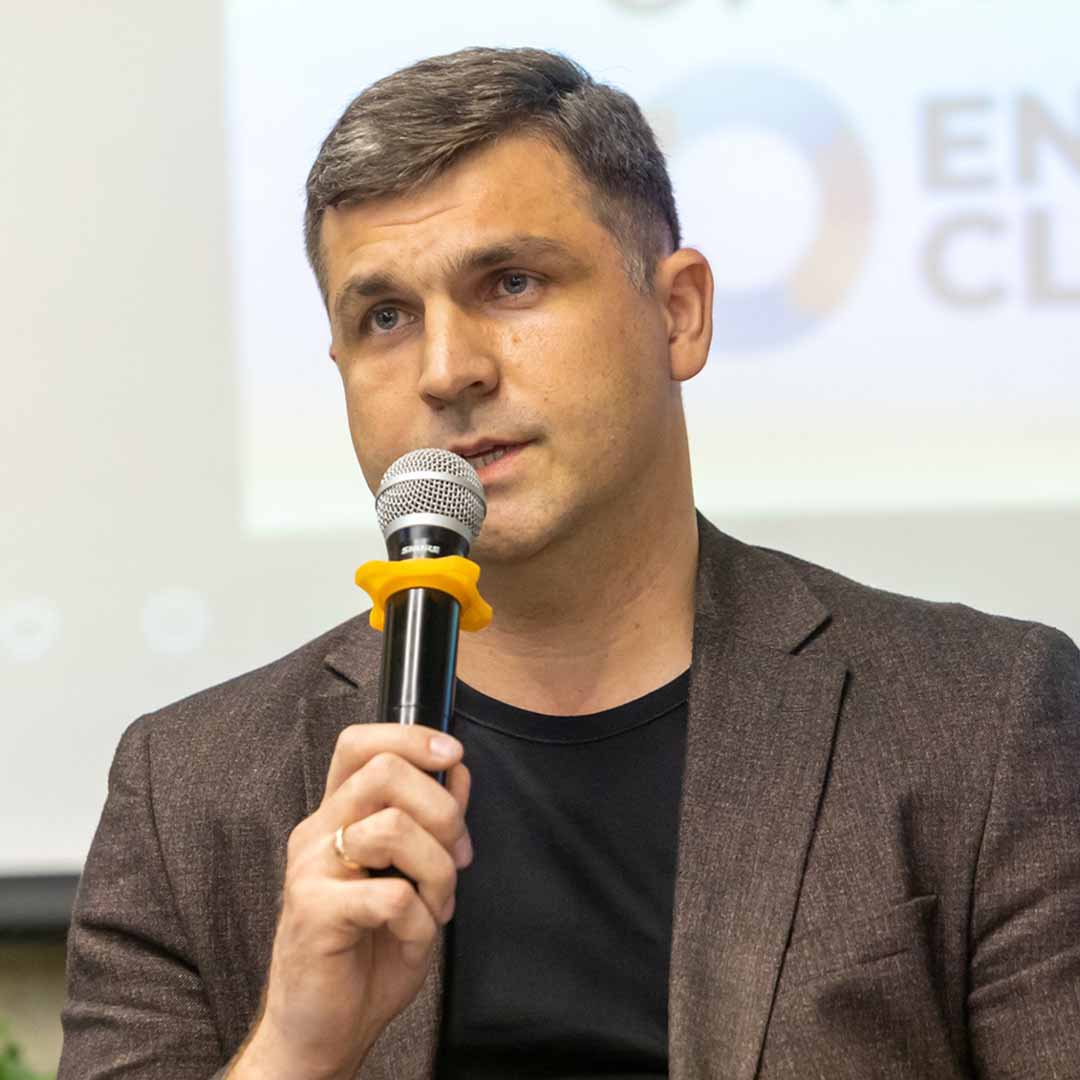
He has three higher educations: in 2008 he graduated from the Faculty of Law of the Ivan Franko National University of Lviv with a degree in “jurisprudence”; in 2015 he received a degree of Candidate of Law from the Lviv State University of Internal Affairs; in 2023 he received a diploma in the specialty “finance, banking, insurance, stock market” from the Faculty of Economics of Ivano-Frankivsk King Danylo Halytskyi University.
He worked as a legal advisor to OJSC “Zakhidenergo” and AMIK “Ukraine”, from 2009 to 2017 – a lecturer, associate professor at the Ivano-Frankivsk King Danylo Halytskyi University of Law; 2020-2022 – Head of the Legal Department, Deputy Director for Legal Affairs of the State Enterprise “Ivano-Frankivskteplokomunenergo”, since October 2022 he has headed LLC “Ivano-Frankivsk Teploenergo”.
Has experience in reorganization of enterprises and building new structures. Engaged in legal practice. Fluent in Ukrainian, English, Polish (C1).
Lecture Content
- Introduction
- Definition and Classification of Alternative Fuels
- Use of Alternative Fuels in the Context of EU Directives
- Prospects of Ukraine in the Field of Alternative Fuels
- Economic Challenges and Incentives for the Production of Alternative Fuels in Ukraine
- Challenges of Legislative Regulation and New Alternative Fuels
- Active Links (NPA, Standards, Resources)
- Glossary
- Questions for Self-Testing
1. Introduction
Bioenergy and alternative fuels are one of the key areas of renewable energy development in Ukraine.
In the context of war-torn Ukraine and the need for decentralization of the energy system, alternative fuels are becoming an important factor in energy independence and security.
The legislative framework is formed by the Law of Ukraine “On Alternative Fuels”, which defines the legal, economic and environmental principles of production, use and stimulation in this area.
2. Definition and classification of alternative fuels
The Law of Ukraine “On Alternative Fuels” defines that:
- Alternative fuels are solid, liquid and gaseous fuels that are an alternative to traditional fuels and are produced from non-traditional sources and types of energy raw materials.
A fuel is considered alternative if it:
- It is completely made from renewable or non-traditional sources of energy raw materials (including biomass).
- It is a mixture of traditional and alternative fuels, while the content of the alternative component meets the technical standards for motor fuels.
- It is extracted from depleted oil and gas fields or from heavy grades of oil, and its characteristics differ from the requirements for traditional fuels.
If the fuel is corresponds to the traditional one, the law applies only to its production, but not to consumers.
Environmental standards: the use of alternative fuels must meet the environmental standards established for traditional fuels.
Classification
- Liquid fuels – 336 types
- Solid fuels – 473 types
- Gas fuels – 1 type
Alternative types of liquid fuels:
- Flammable liquids obtained during the processing of solid fuels (coal, peat, oil shale).
- Alcohols (bioethanol, biomethanol, biobutanol) and synthetic liquid products based on them (including biodiesel, synthetic fuels from biomass, products of the Fischer–Tropsch process).
- Flammable liquids from industrial waste (gas emissions, wastewater, other production waste).
- Fuels from oil and gas condensate of non-industrial or depleted deposits, as well as from heavy grades of oil and natural bitumen (if it does not belong to the traditional type).
Alternative types of solid fuels:
- Products and wastes of agriculture (crop farming, livestock farming), forestry and related industries.
- Granules, briquettes, charcoal and carbonaceous matter produced from these raw materials.
- The organic part of industrial and household waste, granules and briquettes from them.
- Peat and its derivatives (granules, briquettes).
3. Use of alternative fuels in the context of EU directives
It is worth understanding that the development of alternative fuels in Ukraine does not occur in isolation from European policy. Its harmonization is directly related to the EU Directives on Renewable Energy Sources (RED I – 2009, RED II – 2018, RED III – 2023).
The European Union defines clear guidelines and mechanisms for stimulating the transition to alternative fuels. If we look at the dynamics:
- RED II (2018) set quite ambitious goals:
- in industry – 23% alternative fuels;
- in transport – 10%;
- in thermal power engineering – about 20%.
These indicators were actually achieved.
- RED III (2023) changed approaches and slightly reduced the target guidelines.
For example, in transport, a goal of 14% alternative fuels was set. This signals the difficulty of switching transport to alternative energy sources.
Why is this so?
Despite the fact that electric transport is traditionally considered environmentally friendly and contributes to decarbonization, there are serious challenges here. A significant amount of natural minerals and metals are consumed for the production of batteries, and the disposal of these batteries without harming the environment is problematic.
Therefore, the EU is making more realistic forecasts. In the RED III directive, designed for 2030, the overall growth in the use of alternative fuels is predicted at +4%.
WhatAs for industry, the goals are much more optimistic:
- the share of alternative energy should increase to 42–43%,
- in the field of thermal generation – to 32%.
This indicates that the EU sees real opportunities for transition precisely in the industrial sector and heat supply, where it is technologically easier to introduce biofuels or other alternative solutions.
4. Prospects for Ukraine in the field of alternative fuels
Today we are in a situation where the war directly affects the energy sector, and even the statistics of performance indicators in the European Union. But there is no other way for Ukraine — we must move towards decentralization of generation and diversification of energy sources. Yes, we have significant oil and gas deposits, but the future lies in alternative fuels.
An example from practice: in Chernihiv region, the first plant for the production of biomethane from livestock waste has started operating. Raw materials are supplied by local farms. And this is just the beginning – according to the forecasts of the State Agency for Energy Efficiency, about 200 such plants may appear by 2030.
Another promising direction is green hydrogen. Ukraine has all the prerequisites:
- significant potential for renewable energy (wind power plants, solar power plants),
- water resources,
- an extensive system of gas pipelines.
The government has already approved a program for the development of hydrogen energy, and here we have a strategic partnership with Germany, which is ready to purchase large volumes of “green” hydrogen. The problem is transportation. Our gas pipelines need to be modernized. There is positive experience: in Ivano-Frankivsk, tests of networks were conducted, which showed that adding 25% hydrogen to propane and butane is technically possible. But it is difficult to transport hydrogen in its pure form – the system is not ready for this.
Regarding transport: Germany has already declared the transition of all public transport to “green” hydrogen by 2035. This opens up huge prospects for us, but hydrogen plants are high-cost projects. It is difficult for business to establish production on its own, this requires state support programs, credit lines, international investments.
Biogas also has great prospects. An example is Brazil, where about 80% of transport runs on bioethanol from sugar cane. For Ukraine, sugar beet and rapeseed may be potential. According to the law, biofuels should be used as an admixture to traditional fuel so as not to harm engines.
Another resource is pressed biowaste. And here Ukraine has a huge unrealized potential. Currently, the problem with waste is enormous: it accumulates, but is almost not used. Garbage sorting at the disposal stage is only 36%. This is a very low figure. European experience shows that household and industrial waste can be processed much more efficiently. But this requires not only technologies, but also state programs to stimulate the population to sort.
5. Economic Challenges and Incentives for Alternative Fuel Production in Ukraine
For the development of the alternative fuel market, organizational and economic measures, which are enshrined in Ukrainian legislation, are important. They are aimed at making the production and use of alternative fuels more profitable and attractive for both business and citizens.
Main incentive tools:
- Determining sources and areas of financing for activities in the field of alternative fuels.
- Using economic levers and incentives for enterprises, institutions, organizations and citizens that develop and implement resource-saving and environmentally friendly technologies.
- Providing subsidies, grants, tax, credit and other benefits to support new technologies, equipment, materials.
- Stimulating manufacturers of equipment and machinery that operate on alternative fuels, as well as enterprises and citizens that convert equipment from traditional to alternative fuels.
- Promoting innovative activities and attracting foreign investors through the creation of a preferential investment regime.
- Providing state guarantees to protect foreign investments in the field of alternative fuels fuel.
- Creation of a special information fund for the collection, systematization and dissemination of data on non-traditional sources and types of energy raw materials in Ukraine.
The law provides for:
- tax and credit benefits;
- grants, subsidies;
- incentives for enterprises to use environmental technologies;
- guarantees for investment protection.
OneThe mechanisms for implementing legislation are poorly developed, many norms remain declarative.
Important innovation: Bill No. 56-d (2024), which establishes a mandatory share of biocomponents in gasoline from 2025 – at least 5%.
Ukrainian products must be competitive on European markets. One of the main factors affecting the price of production remains energy carriers. This makes our goods less competitive compared to European ones.
The production of products using alternative fuels is a double challenge:
- on the one hand, it is more environmentally friendly;
- on the other hand, it is more expensive to produce.
The Law of Ukraine “On Alternative Fuels” declares guarantees of economic stimulation, but there are no implementation mechanisms. Sub-legal acts that would implement the provisions of the law have not actually been developed.
Stimulating the production of biofuels
An important step was the adoption on June 4, 2024 by the Verkhovna Rada of Ukraine of the draft law No. 3356-d, which provides for the mandatory use of liquid biofuels (biocomponents) in the transport sector.
Main provisions of the bill:
- from May 1, 2025, the share of biofuels in the annual volume of gasoline sales must be at least 5% by volume;
- accounting and control of the content of biocomponents in gasoline is introduced;
- the responsibility of producers, importers and sellers for non-compliance with quotas is established;
- fuel with biocomponents must comply with technical regulations and European standards;
- the sale of gasoline without biocomponents will be punishable by a fine of 7 subsistence minimums (3,028 UAH) for every 1,000 liters of the batch.
Using tars as raw materials
Ukraine has a significant resource for the production of alternative fuels – tars.
- There are tanks with tar stored in the open air near abandoned oil refineries.
- In the heat, evaporation occurs, which harms the environment.
- In Europe, tars have long been processed and are used in industry, construction and even medicine (their positive effect on joints has been studied).
In Ukraine, tar is practically not used. The main reason is the lack of permits for business.
Meanwhile, tars can be effectively used:
- in industry,
- in road construction,
- in fuel production.
- Agrowaste: straw, sunflower husks, corn stalks.
- Wood processing waste: sawdust, shavings.
- Industrial waste: tars (oil refining residues), garbage.
- Oils and fats: rapeseed, sunflower oil, animal fats.
Examples of application:
- straw – as biofuel for boiler houses;
- sunflower pellets – for industrial heat supply;
- tars – for road construction and as a fuel component.
6. Regulatory Challenges and New Alternative Fuels
Regulatory Challenges
Despite significant resources, the alternative fuels sector in Ukraine remains over-regulated, making it unattractive for business.
For active development, it is necessary to:
- simplify the legislative system;
- create more flexible conditions for investors and producers;
- harmonize Ukrainian legislation with EU standards.
First-class biofuels
First-class biofuels include:
- sunflower seeds;
- biofats.
According to the EU RED-3 Directive, their use as raw materials for biofuels should be limited from 2030, as a transition to second-generation raw materials is envisaged.
Thus, sunflower and animal fats will gradually lose relevance in Europe.
Straw as a biofuel
Straw has a promising future in the field of heating.
In Ukraine, boiler plants are already operating, capable of burning straw directly.
Efficiency conditions:
- availability of sufficient raw materials;
- location of plants near fields with grain crops.
Sunflower pellets
Sunflower pellets are used as fuel for heat generation.
Disadvantages compared to wood pellets:
- higher ash content;
- unpleasant odor;
- soot formation.
Because of this, sunflower pellets are only suitable for industrial zones, but not for use near residential buildings.
Bioenergy and alternative fuels are not only the path to Ukraine’s energy independence, but also an important direction for European integration and the fulfillment of climate commitments.
Key conditions for success:
- state support (grants, loans, tax breaks);
- development of infrastructure for production and transportation;
- attraction of investments in plants and technologies;
- stimulation of the population to environmental solutions and waste sorting.
Despite the raw material and technological potential, the development of bioenergy in Ukraine requires:
- changes in legislation,
- simplification of regulatory procedures,
- effective state incentives.
Active links (NPA, standards, resources)
- Law of Ukraine “On Alternative Fuels” (Vedomosti Verkhovnoi Rada of Ukraine (VVR), 2000, No. 12, Art. 94) https://zakon.rada.gov.ua/laws/show/1391-14#Text
- Law “On Alternative Energy Sources” (Vedomosti Verkhovnoi Rada of Ukraine (VVR), 2003, No. 24, Art. 155): https://zakon.rada.gov.ua/laws/show/555-15#Text
- Draft Law No. 3356-d (on the mandatory use of liquid biofuels in transport) http://w1.c1.rada.gov.ua/pls/zweb2/webproc4_1?pf3511=68617
- EU Directive RED I (2009/28/EC) https://eur-lex.europa.eu/legal-content/SV/ALL/?uri=celex:32009L0028
- EU Directive RED II (2018/2001/EU) https://eur-lex.europa.eu/legal-content/EN/TXT/?uri=CELEX:32018L2001
- EU Directive RED III (2023/2413/EU) https://eur-lex.europa.eu/legal-content/EN/TXT/?uri=CELEX:32023L2413
- State Energy Efficiency of Ukraine – Bioenergyhttps://saee.gov.ua/diialnist/vidnovliuvalna-enerhetyka/alternatyvna-enerhetyka/bioenerhetyka