Commercial accounting service provider
Module 6Lection 8
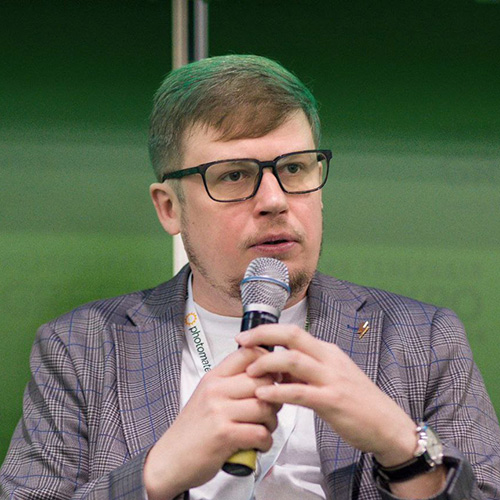
Stanislav Ignatiev – Doctor of Technical Sciences, Professor, Chairman of the Council Chairman of the Council of the Ukrainian Renewable Energy Association, founder of the Kharkiv Energy Cluster.
For five years, he was the Executive Director (CEO) of Solar Generation LLC, performed the function of a crisis manager, reformatting the business, achieving a net profit of UAH 335 million per year.
He has experience in managing construction projects of 110 MW of solar power plants and 25 MW of wind power plants from the “green field” development stage, obtaining permits to commissioning and subsequent operation management.
Optimized business management processes through automation of dispatch control and generation forecasting.
Developed and prepared to the “ready to build” stage investment projects in “green” energy: 180 MW of solar power plants, 45 MW of gas-piston power plants, 52 MW of wind.
In the Office of the President of Ukraine in 2021-2022, he led the development group of the President’s Program “Great Thermal Modernization”: from team formation, creation of a KPI system, organization of “brainstorming” and “strategic sessions” to the presentation of the Program at the level of the First Vice Prime Minister of Ukraine, a relevant deputy of the Office of the President, and the President of Ukraine.
Chairman of the Council of the Ukrainian Association of Renewable Energy, which unites 82 electricity generating companies. Public lobbying for regulatory legal acts that ensure transparency and efficiency of the electricity market. Systematic public speeches at the largest industry forums and conferences in Ukraine and Europe.
Founder of the Kharkiv Energy Cluster, the largest association of 38 small and medium-sized businesses in Ukraine (energy, construction, law and financial management).
In addition, Stanislav Ignatiev was the head of non-extractive projects in the Kharkiv region of Shell Ukraine LLC, and as the director of WSB Ukraine LLC, he established the international energy holding WSB Green Energy in Ukraine. As the head of the Ukrenergo Laboratories project of PJSC NPC Ukrenergo, he made a lot of efforts to create a positive image of the company, form a personnel reserve, and collect innovative ideas for the development of the national electricity transmission system operator.
Honorary Professor of the European Institute of Second Education (Slovakia), MBA in Sustainable Energy, London School of Economics, Ph.D. in Energy, Dresden University of Technology (Germany). Speaks English, Polish, and German.
Lecture content:
- Introduction
- The 2019 Electricity Market Reform and the Role of the Commercial Accounting Service Provider
- Commercial Accounting Service Provider (CSP)
- Types of Consumers and Features of Commercial Accounting
- How to Become a Commercial Accounting Service Provider (CSP)?
- Choosing and Replacing a Commercial Accounting Service Provider (CSP)
- Termination of Services by a Commercial Accounting Service Provider (CSP)
- Accounting Point
- Conclusions
- Active Links (NPA, Standards, Resources)
- Glossary
- Self-Check Questions
1. Introduction
With the start of the electricity market reform in 2019, commercial electricity metering projects were launched in Ukraine. Their main goal is to increase the transparency, reliability, and accuracy of data on electricity consumption, production, and transmission.
Legislative framework:
- Law of Ukraine On the Electricity Market (2018, No. 2019-VIII) – implementation of the provisions of EU Directive 2009/72/EC and Regulation (EC) No. 714/2009.
- Law of Ukraine On the National Commission for the Regulation of the Energy Sector of Ukraine (NCERC) (2016, No. 1540-VIII) – implementation of EU Directives 2009/72/EC and 2009/73/EC.
Based on these laws, the Code of Commercial Electricity Accounting was adopted, which establishes:
- rules and procedure for organizing accounting;
- technical requirements for meters and reading systems;
- regulations for data collection and exchange between participants market.
The main goal of the Code is to ensure the reliability of data on generated, consumed, transmitted and distributed electricity, which is critically important for market transparency.
2. Electricity market reform in 2019 and the role of the commercial metering service provider
In 2019, the electricity market reform started in Ukraine, which fundamentally changed the commercial metering system.
Before the reform:
- commercial accounting was mainly carried out by Oblenergo;
- the meters of producers and consumers were on the balance sheet of Oblenergo;
- accounting was actually monopolized and depended on the distribution network operator.
After the reform:
- the electricity supply service was transferred to a separate segment;
- the meters were transferred either to organizations – providers of commercial accounting services (PPKO), or to balance holders (producers or consumers);
- only technical functions remained with Oblenergo: verification and sealing of meters.
3. Commercial metering service provider (CMSP)
A CMSP is an independent legal entity or individual that:
- is not subordinate to a distribution system operator (DSO) or a transmission system operator (TSO);
- has an appropriate license to operate in the DSO or TSO networks;
- has the necessary software;
- provides certification of personnel to perform commercial metering functions.
Thus, a CMSP becomes a new market player that ensures data transparency, competition in metering, and more efficient management of electricity data.
The Commercial Accounting Administrator (CAO) and Commercial Accounting Service Providers (CASPs) play a key role in implementing the new accounting system.
📌 Who is AKO?
- AKO is NPC Ukrenergo or distribution system operators (Oblenergo), which ensure the maintenance of a centralized register of commercial metering service providers.
📌 Functions of AKO:
- creation and maintenance of the PPKO register;
- control of changes to data;
- processing of information that must be received from PPKO no later than 5 business days after the changes occur.
📌 PPKO register:
- public and available on the Internet, in particular on the DATAHUB page (https://public.datahub.ua.energy/).
📌 Legal principles:
- in accordance with the Law of Ukraine “On the Electricity Market”,
- commercial accounting services can be provided only by those PPKOs that have been officially registered with the AKO;
- the registration procedure is determined by the Regulations of the Commercial Accounting Code.
Thus, the PPKO register guarantees transparency, unified rules and quality control of services in the field of commercial accounting of electricity.
4. Types of consumers and features of commercial accounting
In the electricity marketIn the field of energy in Ukraine, there are two main types of consumers:
- Household consumers – owners of apartments, private houses.
- Non-household consumers – businesses, industrial enterprises, organizations, as well as generation facilities.
Each consumer has his own electricity supplier and has the right to change it freely and free of charge.
Household consumers
- They switched to a new system of contracts: separately for distribution and supply.
- Tariffs for the population remained unchanged.
- The possibility of paying at differentiated tariffs (night/day) remains.
- The possibility of changing the supplier exists, but operates at free prices.
- The regulator has tightened the requirements for the quality of service provision and increased the amount of compensation in case of improper service.
- The electricity metering of household consumers is usually carried out by energy sales companies or accredited operators (Ukrenergo, Oblenergo).
Non-household consumers
- There are 224 independent suppliers with appropriate licenses operating on the market.
- About 200 contracts for electricity supply have been concluded.
- Free access of suppliers to all categories of consumers has been ensured.
- A supplier of last resort (SRU) with established tariffs has been identified and is functioning.
- Consumers connected directly to the transmission system operator (TSO) networks have stopped paying for TSO services.
- For the first time, individual water utilities have received a license to supply electricity.
Installation of meters
According to the Code of Commercial Accounting and Code of Electricity Distribution Systems:
- The meter is installed beyond the balance sheet – on the consumer or producer side.
5. How to become a commercial accounting service provider (CSP)?
Any business entity can register as a CSP if it:
- ensures compliance of its automated system with the requirements of the Regulation;
- has sufficient qualification of specialists;
- has the necessary licenses, permits and insurance contracts;
- fulfills the requirements of the Commercial Accounting Code.
Registration procedures
Registration is carried out through the DATAHUB service in two formats:
- Simplified procedure – for roles:
- OZKO (operator of commercial accounting facilities accounting);
- OZD (meter reading operator).
- Full procedure – for roles:
- ODKO (commercial accounting data operator);
- ATKO (commercial accounting point administrator).
Only system operators can be registered for the ATKO role.
Further steps after registration
- PPKO submits applications to create users and gain access to the systems:
- MMS (Market Management System);
- Datahub information and communication platform.
- The application form and consultations are available at: 📧 regoffice@ua.energy.
Grounds for canceling PPKO registration
AKO may cancel registration in cases of:
- failure by the applicant to meet the deadlines for eliminating comments on documents;
- repeated submission of a package of documents that does not meet the requirements;
- non-compliance of the automated system with established standards;
- voluntary refusal of the applicant.
6. Selection and replacement of a commercial accounting service provider (CSP)
The process of selection and replacement of a CSP is carried out on a transparent and non-discriminatory basis, in accordance with regulations and information exchange protocols approved by the Commercial Accounting Administrator (CAO).
Cases when PPKO is replaced:
- Selecting another PPKO among those registered in the AKO (data is available in the PPKO Register).
- Cancellation of registration of an existing PPKO at a specific commercial metering point.
- Expiration or non-extension of the contract between the VTKO (the party responsible for the commercial metering point) and the PPKO.
Technical procedure for changing the PPKO
- Replacement is carried out at commercial metering sites (Accounting Point) in the centralized MSW register.
- The procedure is available to all MSW entities according to registered roles.
Access to data before selecting a new MSW entity
The new MSW entity has the right to apply to the AKO to obtain:
- basic data;
- historical commercial accounting data for the relevant sites.
This access is provided according to special procedures, in particular:
- Request for MSW data viewing – viewing information;
- Request for actual MSW data – obtaining actual commercial accounting data.
7. Termination of services by a commercial metering provider (PPKO)
According to the Regulations on information interaction regarding changes to PPKO, in the event of the expiration of the contract for the provision of commercial metering services, PPKO has the right not to extend its validity.
Actions of the responsible party for the commercial metering point (VTKO)
- Obligation to select a new PPKO in a timely manner through the PPKO Register or
- Apply to the system operator (OS) to receive commercial metering services. The OS does not have the right to refuse to provide such services.
Cases when the replacement of the PPKO is mandatory:
- Cancellation of its registration by the AKO (clause 3.4.6 and clause 2.7.5 of the CCO).
- No extension of the agreement between the VTKO and the PPKO.
Who can be the PPKO?
- VTKO has the right to independently act as the PPKO (clause 2.7.9 of the CCO), if it has a valid registration with the AKO.
Grounds for cancellation of the registration of the PPKO by the Commercial Accounting Administrator (AKO):
- Submission of the PPKO application for cancellation on its own initiative.
- Systematic (3 times in a row) failure to comply with the AKO requirements to eliminate violations Code and/or contract terms.
- Identification of violations during scheduled or unscheduled inspections.
Cancellation procedure from 02/26/2025
- Can be performed via the Datahub platform according to the instructions “Cancellation of PPKO”.
- Unregistered users should contact AKO in writing.
8. Platform for commercial electricity accounting (Accounting Point)
Platform for commercial electricity accounting (Accounting Point) is a centralized platform that provides collection, storage and exchange of data on the production, distribution and consumption of electricity.
Main features:
- Fully centralized system. All data is concentrated in a single information base.
- Availability. Available to all providers of commercial accounting services after their prior registration in the Datahub system.
- Transparency and reliability. Ensures transparent accounting and prevents data manipulation.
Regulations on information interaction
According to the Code of Commercial Accounting of Electricity, service providers are obliged to:
- Provide all information upon requests from Oblenergo or Ukrenergo.
- Adhere to information exchange standards that guarantee correctness and efficiency data.
Action in case of emergency or abnormal situations:
In such cases, the decision is made jointly between:
- The owner of the electricity consumption or generation facility;
- The operator of commercial electricity metering;
- The provider of commercial metering services.
The goal is to quickly restore metering and minimize risks to the power system.
9. Conclusions
- Providers of commercial metering services are a key element of the new electricity market.
- They ensure data accuracy, transparency of mutual settlements and control over consumption/generation volumes.
- For household consumers, the reform is practically imperceptible, but for businesses, it means new choices, competition between PPKOs and flexible conditions.
- Efficient metering is the key to a transparent and competitive energy market.
Active links (NPA, standards, resources)
- Law of Ukraine “On the Electricity Market” (Vedomosti Verkhovna Rada (VVR), 2017, No. 27-28, p. 312): https://zakon.rada.gov.ua/laws/show/2019-19#Text
- Law of Ukraine “On the National Commission for State Regulation in the Energy and Utilities Sectors” (Vedomosti Verkhovna Rada (VVR), 2016, No. 51, p. 833): https://zakon.rada.gov.ua/laws/show/1540-19#Text
- Code of Commercial Electricity Accounting (Resolution of the National Commission for the Regulation https://www.nerc.gov.ua/
- Ministry of Energy of Ukraine – market reforms and analytics: https://mev.gov.ua/