Forecasting. How to pay less for electricity?
Module 6Lection 6
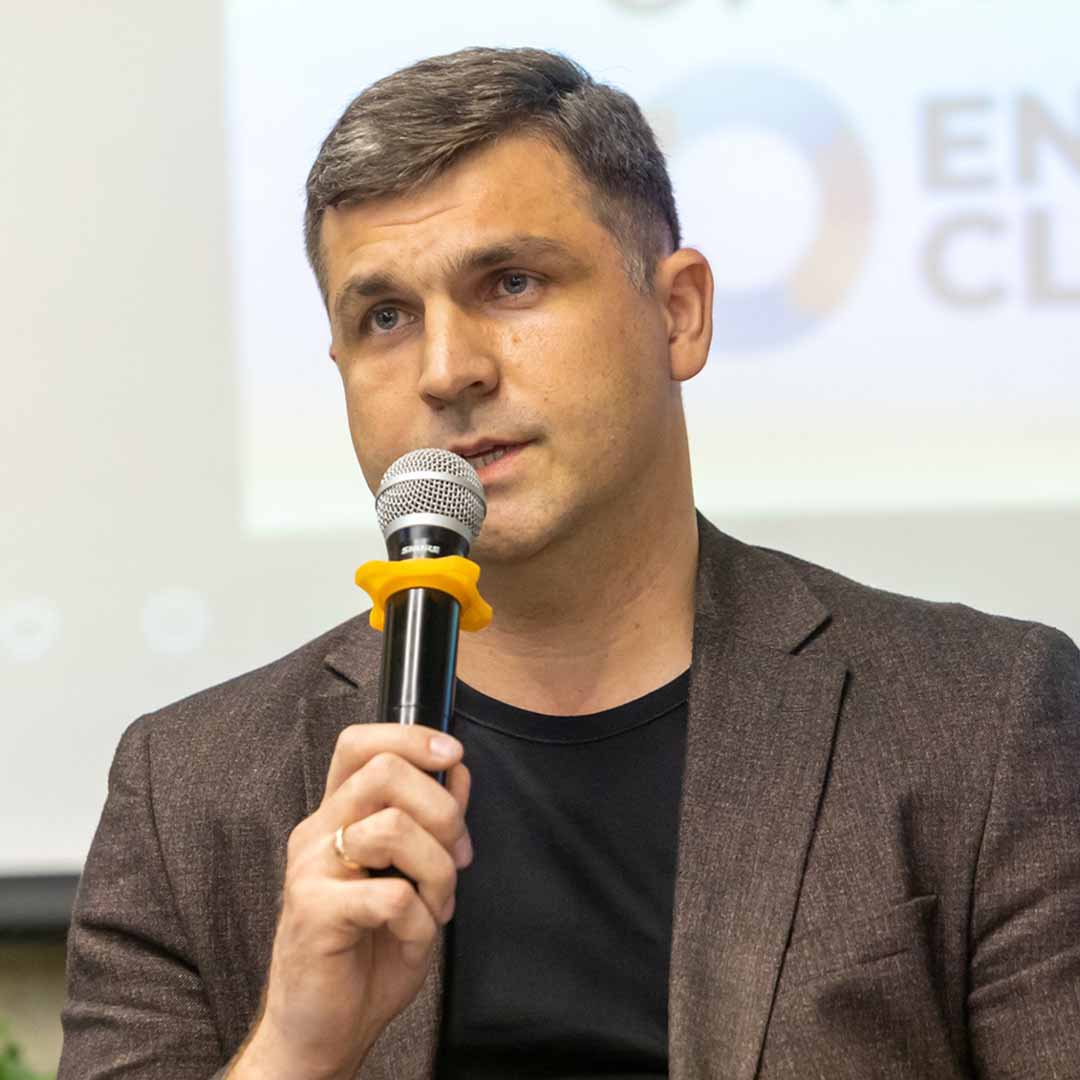
He has three higher educations: in 2008 he graduated from the Faculty of Law of the Ivan Franko National University of Lviv with a degree in “jurisprudence”; in 2015 he received a degree of Candidate of Law from the Lviv State University of Internal Affairs; in 2023 he received a diploma in the specialty “finance, banking, insurance, stock market” from the Faculty of Economics of Ivano-Frankivsk King Danylo Halytskyi University.
He worked as a legal advisor to OJSC “Zakhidenergo” and AMIK “Ukraine”, from 2009 to 2017 – a lecturer, associate professor at the Ivano-Frankivsk King Danylo Halytskyi University of Law; 2020-2022 – Head of the Legal Department, Deputy Director for Legal Affairs of the State Enterprise “Ivano-Frankivskteplokomunenergo”, since October 2022 he has headed LLC “Ivano-Frankivsk Teploenergo”.
Has experience in reorganization of enterprises and building new structures. Engaged in legal practice. Fluent in Ukrainian, English, Polish (C1).
Lecture content:
- Introduction
- Ways to save electricity
- Renewable energy as a tool for saving electricity
- Energy storage systems
- Zone electricity metering
- Tariffs and competitiveness
- Active links (NPA, standards, resources)
- Glossary
- Questions for self-testing
1. Introduction
The question of “how to pay less for electricity” is more complicated than it seems at first glance. It’s not just about reducing bills, but also about maintaining the rate of production and service provision without losing efficiency.
It is worth noting right away that any measures to save electricity require additional investments – that is, investments in more modern technologies, equipment or metering systems.
An example from the experience of LLC “Ivano-Frankivsk Teploenergo”
LLC “Ivano-Frankivsk Teploenergo” together with the Ivano-Frankivsk Institute for Energy Efficiency Research conducted an analysis of natural gas consumption at 17 boiler houses of the enterprise.
Recommendation: install meters of a higher accuracy class.
According to the Law of Ukraine “On Gas Distribution Networks”, operators of gas distribution networks are obliged to take into account the indicators of such meters.
- Effect: savings of about 800 thousand UAH per season only due to more accurate accounting.
- Investment: over 1 million UAH for all boiler rooms.
- Payback period: approximately 1.5 seasons.
This example demonstrates that accurate accounting = real savings.
2. Ways to save electricity
There are other methods of reducing energy consumption, including electricity. This can be:
- replacing energy-consuming equipment (pumps, gas burners) with more modern ones with a smaller flow diameter;
- regular cleaning of boilers;
- modernizing control systems, etc.
These are the practical steps that allow you to reduce costs and increase efficiency.
The very first task is to understand where exactly there is a reserve for savings, how you can actually reduce consumption. To do this, an energy audit of the enterprise is carried out: energy-consuming equipment is identified, its operation is analyzed, after which analogues with a higher energy efficiency class are offered. If possible, the equipment is replaced.
It is clear that the main problem is often lack of funds. There is not always access to investments, and the enterprise’s own resources are not enough. But energy-efficient measures still need to be gradually implemented – even partial modernization already gives tangible results.
And we must clearly understand: if we do not start reducing consumption ourselves, we will be forced to do so through price increases. Tariffs are growing, and the payment for electricity in the future will only be higher.
There are many investment and grant programs for the transition to more economical consumption – both international and state. This is a real opportunity to finance modernization, obtain new equipment or technologies without excessive burdening your own budget.
3. Renewable energy as a tool for saving electricity
One of the most popular ways to save electricity and reduce dependence on fossil fuels is transition to renewable energy. It is worth emphasizing that this direction is expensive, especially at the initial stage of investment. For comparison: traditional generation, in particular nuclear power, remains the cheapest.
However, today’s realities — hostilities, risks of centralized generation, the need to increase energy security — are forcing Ukraine to move towards decentralization of generation and a gradual transition to renewable energy sources (RES).
Ukraine seeks integration into the European Union, where one of the main strategic priorities is the European Green Deal. Its goal is to achieve climate neutrality by 2050. The main tool of this deal is decarbonization of the energy system, in particular through the development of RES.
Challenges of renewable energy
One of the most common arguments against the use of RES is their dependence on weather conditions. However, modern technologies significantly reduce this risk:
- Energy storage systems
Lithium-ion batteries allow you to store excess electricity during periods of surplus and release it during peak loads.
An example is large-scale projects in the USA, where battery storage is an alternative to traditional thermal power plants. - Smart grids
Provide flexible management of generation and consumption, which allows you to balance the power system even in conditions of unstable generation from renewable energy sources. - Combineing different sources
The combination of solar, wind, sustainable bioenergy and storage provides a more even distribution of capacities throughout the day.
The development of these technologies proves that RES can function effectively without significant interruptions in supply. Moreover, combining them with zonal electricity metering (night and day tariffs) allows consumers to save significantly by redirecting consumption to hours with lower tariffs.
4. Energy storage systems
The legislative regulation of energy storage systems in Ukraine was enshrined by the Verkhovna Rada of Ukraine by adopting the Law of Ukraine “On Amendments to Certain Laws of Ukraine Regarding the Development of Energy Storage Facilities”. This document defines the basic concepts and conditions for conducting activities in the field of energy storage.
Key definitions:
- Energy storage facility – an electrical installation in which the process of energy storage is carried out.
- Energy storage facility operator – an individual, including an individual entrepreneur, or a legal entity (except for pumped storage power plants), who carries out energy storage activities for the purpose of:
-
- selling electricity released from the facility,
- providing ancillary services,
- ensuring balancing of the power system.
- Energy storage – an activity that includes:
-
- electricity withdrawal,
- postponement of its final use to a later time than the time of generation,
- conversion into another type of energy for storage,
- further conversion back into electrical energy for release into the transmission, distribution system, power plant network or consumer.
Licensing conditions for conducting business activities in energy storage
In Ukraine, the activities of business entities in the field of energy storage are regulated by law and by-laws of the National Commission for the Regulation of Energy and Utilities of Ukraine.
- General requirements
- Activities are subject to licensing if the total installed capacity of energy storage facilities is 150 kW and above.
- If the capacity is less than this threshold, the activity can be carried out without a license, but subject to the established conditions.
- Cases when a license is not required
Energy storage activities do not require a license if the facility is used in the following cases:
- By a consumer – provided that at no time does he release previously stored electricity to the Unified Energy System of Ukraine (UES) or to the network of other economic entities.
- By producers of electricity with “green” tariff or those who have obtained the right to support based on the results of the auction, under the following conditions:
-
- energy generated only by own installations operating with alternative sources is accumulated;
- selection is carried out exclusively from own generating installations, and at no time does the output capacity exceed the installed capacity of these installations in accordance with the license for electricity production;
-
- separate commercial accounting is maintained of the electricity supplied to and released from the installation, in accordance with the Code of Commercial Accounting of Electricity (Resolution of the National Commission for the Regulation of the National Energy Regulatory Commission of Ukraine dated 14.03.2018 No. 311).
- Other electricity producers – at the place of licensed production activity, if:
-
- the storage facility takes energy exclusively from the generating facilities of this producer;
- at any time, the total delivery capacity to the Unified Energy System does not exceed the licensed installed capacity of the producer;
- separate commercial accounting is available in accordance with the requirements of the Commercial Accounting Code.
- By the transmission system operator or distribution system operator – in cases specified by the Law of Ukraine “On the Electricity Market”, and only on condition that the Regulator (NKREKP) has provided such right.
Industrial energy storage systems
A consumer has the right to use energy storage installations without obtaining a license for conducting economic activities in energy storage, if at any time he does not release previously stored electricity to the Unified Energy System of Ukraine or to the network of other economic entities.
Main scenarios for using energy storage systemsenergy supply at industrial enterprises:
- Additional power reserve. This is a reserve for an object with a cheaper cost of electricity compared to diesel generators.
- Covering peak load. Charging during hours of surplus and cheap electricity, return – during peak hours, which allows you to pay less.
- Increase in maximum power. The ability to increase the power of the object without coordinating the technical conditions with the DSO.
Thanks to such systems, large industrial and commercial objects can guarantee uninterrupted power supply even during failures in the central network. This allows you to avoid production downtime, which is critically important for continuous-cycle enterprises.
Modern storage systems can:
- provide up to 2 MW of power and 10 MWh of capacity,
- switch from the grid almost instantly,
- operate for over 10,000 cycles and 15 years, with battery degradation of about 12% over 10 years.
5. Zonal electricity metering
Currently, there are two main types of meters:
- Normal. Provides a general accounting of electricity consumption – calculation at a single tariff.
- Differentiated. Keeps records for different periods of the day (two-zone or three-zone).
Coefficients for two-zone tariffs:
- day zone (07:00 – 23:00) – 1.0;
- night zone (23:00 – 07:00) – 0.5.
Coefficients for three-zone tariffs:
- peak zone (08:00 – 11:00, 20:00 – 22:00) – 1.5;
- night zone (23:00 – 07:00) – 0.4.
Thus, the use of differentiated metering allows enterprises and households to reduce costs by shifting consumption to “cheap” hours.
6. Tariffs and competitiveness
Along with the implementation of energy efficiency measures, it is important to review the tariffs set by the National Commission for the Regulation of Energy and Power Generation and Energy. Today, they are formed on the basis of planned costs set by electricity producers and suppliers. Therefore, the National Commission for the Regulation of Energy and Power Generation and Energy Efficiency should analyze in detail which costs are included in the tariff structure, as there are legislative mechanisms that can contribute to artificially increasing prices.
The problem is that in the European Union, electricity tariffs for businesses are often even lower than for household consumers. In Ukraine, the situation is the opposite: our enterprises are forced to work at high tariffs for energy and services. This significantly complicates competition with European manufacturers, because the cost of Ukrainian products is increasing due to more expensive electricity.
Another important aspect is the popularization of the economical use of energy resources. The importance of saving should be explained not only to enterprises and households. The formation of a culture of responsible consumption should begin in kindergartens and schools, so that future generations perceive energy efficiency as the norm of life.
Active links
- Law of Ukraine “On the Electricity Market” (Vedomosti Verkhovnoi Rada (VVR), 2017, No. 27-28, Art. 312): https://zakon.rada.gov.ua/laws/show/2019-19#Text
- Law of Ukraine “On Amendments to Certain Laws of Ukraine Regarding the Development of Energy Storage Facilities” (Vedomosti Verkhovnoi Rada of Ukraine (VVR), 2023, No. 14, Art. 41): https://zakon.rada.gov.ua/laws/show/2046-20#Text
- Code of Commercial Electricity Metering (NCRECP No. 311, 2018): https://zakon.rada.gov.ua/laws/show/v0311874-18#Text
- European Green Deal. Energy efficiency in the EU: https://commission.europa.eu/strategy-and-policy/priorities-2019-2024/european-green-deal_en