Economics of renewable energy sources
Module 4Lection 1
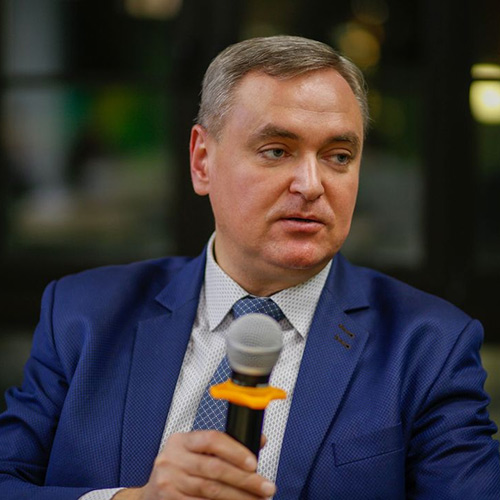
Dmytro Olefir – Junior Research Fellow at the Institute of Electrodynamics of the National Academy of Sciences of Ukraine, expert in energy systems management and electricity market functioning, Deputy Director of Balancenergo LLC – optimization of the strategy for working in the electricity market, coordination of equipment modernization work, coordination of work on creating an aggregated group, participation in the GTU+BESS innovation project. Deputy Director of Energy Trade Group LLC – organized a business process for exporting/importing electricity, built models for distributed generation and BESS construction projects. Manages projects for automating BESS management and organizing an aggregated group for working in the electricity market.
Has several higher educations: diploma with honors in MBA – Institute of Business Education, Kyiv National Economic University of Ukraine named after V. Hetman; postgraduate studies in the specialty “Power Plants and Power Systems”, National Technical University of Ukraine (Kyiv Polytechnic Institute), diploma with honors in the specialty “Automation of Electrical Systems Control”, qualification as an electrical engineer – National Technical University of Ukraine (Kyiv Polytechnic Institute); bachelor’s degree in “Electrical Engineering”, NTUU (Kyiv Polytechnic Institute).
In 2022-2024 – member of the Supervisory Board of PrJSC “Zaporizhtransformator”. Restored the efficiency and profitability of the enterprise, developed proposals for the operation and development of the plant under martial law, improved corporate governance, control of the implementation of the Financial Statements and other documents.
In 2023 – member of the board of directors of PJSC “Centrenergo”. Implemented a new trading strategy in various segments of the electricity market and effective planning.
In 2022-2023 – Chairman of the Supervisory Board of JSC “Market Operator”. Approved the executive body in accordance with the current regulatory framework of Ukraine and the Charter of the Company, approved the financial plan of the Company for 2023 and conducted an audit.
In 2021-2022, as an advisor to the General Director of JSC “Market Operator”, he developed proposals to improve the company’s work in the conditions of synchronization of the Unified Energy System of Ukraine with ENTSO-E.
As a member of the NSDC working group, he developed an action plan to overcome threats in the energy industry.
From 2018 to 2021, he headed the commercial department of PrJSC “Ukrhydroenergo”. He had the right to sign financial documents in the electricity market. In a short time, he organized the commercial activities of PrJSC “Ukrhydroenergo” in the new electricity market (recruitment, software, regulations for interaction with divisions, finalization of the regulatory framework for the operation of the electricity market (interaction with the National Commission for the Regulation of Energy and Utilities of Ukraine, NEC “Ukrenergo”, Ministry of Energy, Cabinet of Ministers of Ukraine, JSC “Market Operator”, LLC “UEB”, market participants, USAID).
In 2021, according to the results of the competition, by order of the Cabinet of Ministers of Ukraine, he was approved for the position of a member of the Board of Directors of NEC “Ukrenergo”.
He has experience in cooperation with the American company GESS Ukraine. He prepared a Feasibility Study for the reconstruction of the Kherson CHPP with its conversion to biogas operation.
2014-2023 – Corresponding Member of the Academy of Technological Sciences of Ukraine. He participated in the activities of the Academy of Technological Sciences of Ukraine, is the author of scientific and practical articles, reports at energy forums, and developed a proposal for the implementation of international standards in in the field of power systems management and information support in the power sector of Ukraine, the functioning of the electricity market.
In 2013 – 2021 – an individual member of the NGO “CIGRE-Ukraine”, its presentations at the international level.
Has many years of experience in interacting with the National Commission for the Regulation of Energy and Power Generation of Ukraine, the Ministry of Energy, the Cabinet of Ministers of Ukraine, the World Bank, research institutes, USAID, generating companies and DSOs, European TSOs and SOs of the CIS and Baltic countries, international and Ukrainian consulting companies, international software developers, experience in scientific and teaching activities, management of large teams (over 2.5 thousand employees); impeccable business reputation; significant experience as a risk manager.
Lecture content
- Alternative or renewable generation
- European experience: stages
- Challenges for balancing energy systems in the development of RES
- Development of renewable energy sources in Ukraine
- “Green” tariffs for RES in Ukraine
- Economic and technical challenges in Ukraine
- Development strategy for the Unified Energy System of Ukraine
- Conclusions on the economic feasibility of implementing RES
- Active links (NPAs, standards, resources)
- Glossary
- Questions for self-testing
1. Alternative or Renewable Generation
Renewable energy sources (RES) are sources that are naturally renewable and provide a sustainable energy supply.
These include:
- Solar energy
- Wind energy
- Geothermal (heat from the earth’s interior)
- Hydrothermal and aerothermal (thermal energy from water and air)
- Wave and tidal energy
- Hydropower
- Bioenergy (biomass, biogas, gas from organic waste, gas from sewage treatment plants)
- Secondary energy resources:
- blast furnace and coke oven gases,
- methane from coal bed degassing,
- use of the waste energy potential of technological processes.
The most developed areas in world practice are solar and wind generation.
Their contribution to the overall power balance is growing, while the share of biogas or other less common sources remains relatively small.
2. European experience: stages
- 1940–1970s
Beginning of pioneering research in the field of solar and wind energy.
Renewable energy sources were not yet widely used – they focused mostly on theoretical developments and the first experimental installations. - 1980s
Growing attention to sustainable development and environmental problems.
Germany and Denmark begin to actively invest in wind energy technologies. - 1990s
Launch of state support programs for RES in various European countries:
-
- Germany introduces the first solar energy subsidy program;
- Denmark actively develops wind generation and becomes a world leader in this area.
- 2000–2010s
Significant increase in investments in RES.
European countries are adopting ambitious laws and support programs, including on:
-
- reducing CO₂ emissions,
- switching to renewable energy sources within the framework of EU policy.
- 2010s and beyond
Implementing new development strategies:
-
- decentralizing the construction of power plants,
- developing local projects,
- introducing balancing mechanisms, including energy storage systems (BESS).
3. Challenges for balancing energy systems in the development of RES
The active introduction of renewable energy sources has led to a significant expansion and acceleration of energy transformation processes. At the same time, this creates serious challenges for balancing energy systems, which is one of the key problems for countries that are rapidly transitioning to RES.
Main challenges:
- Fluctuations in electricity production – generation depends on weather conditions, changes hourly and seasonally.
- Unregulated RES – solar and wind energy cannot be regulated quickly.
- Uncertainty in forecasting – it is difficult to accurately determine production volumes in advance (for example, predict wind strength or the amount of sunlight).
- Infrastructural problems – limited network capabilities, the need to create “smart” systems (smart grids) and integrate energy storage.
Examples of problems:
- Wind and solar power plants produce electricity unevenly: solar – only during the day, and wind – depending on the strength of the wind. This makes it difficult to maintain a balance between supply and demand in real time.
- Without additional mechanisms, including energy storage facilities, regulating RES is almost impossible.
- The forecastThe operation of wind farms and solar power plants in a month or even a week remains an extremely difficult task.
Example: an accident in the European power system (UCTE, 2006)
On November 4, 2006, a large-scale accident occurred in the UCTE (Union for the Coordination of Transmission of Electricity) power association: the system was divided into three asynchronously operating parts.
Reason: The significant volumes of generation at wind farms in northern Germany, which transported electricity to the south of the country and to other countries, overloaded the networks.
Consequences:
- disconnection of consumers, including industrial ones;
- large-scale energy losses;
- losses for business and the population;
- stoppage of economic activity;
- costs for restoring and repairing networks.
The short-term losses were estimated at 1–2 billion euros.
This incident showed how important flexibility and reliability of power systems are, able to withstand failures and prevent accidents from spreading to large areas.
Sweden’s case: distributed solar generation
First steps.
Pilot projects using solar energy were launched in Sweden about 30 years ago.
- Solar panels were installed on the roofs of private households.
- Batteries were placed in basements.
- During the day, the panels charged the batteries, which in the evening provided the house with energy during peak consumption hours.
For that time, it was almost a fantastic solution, while today such projects are common practice all over the world.
Traditional structure of the power system.
- The basis is hydropower and biomass.
- Solar generation has been actively developing since the 2000s.
Key stages of development:
- 1980s: first installations for small needs (lighting remote areas).
- 2000s: beginning of active development of renewable sources.
- 2009: government introduces subsidies to stimulate the installation of solar panels → attracting investment in the sector.
- 2015: new support measures, including tax breaks for households → increasing number of private SPPs.
Status at the end of 2023:
- ~252,000 solar power plants (SPPs).
- Total installed capacity is about 4 GW.
- 60% of this capacity is small installations (<20 kW) owned by private households.
Case study of Germany: evolution of support
2000s – start of large-scale support
- The Federal Act on Renewable Energy Sources (EEG, 2000) was introduced.
- A mechanism for feed-in tariffs (guaranteed electricity prices from RES).
- Active investments in large solar power plants (SPPs).
2010s – reorientation towards distributed generation
- 2012: gradual reduction of support for large SPPs due to high budget costs.
- Emphasis on rooftop installations for households and small businesses.
- 2014: legislative limitation of support for large solar parks.
- The goal is to stimulate the development of small SPPs on rooftops and the sale of excess energy to the grid.
- 2017: final limitation of subsidies for large solar plants, emphasis on technological innovations and integration of SPPs into urban infrastructure.
Reasons for change strategies:
- Overcapacity: by 2012, the volume of solar power plants combined with wind power plants exceeded market needs.
- High costs: the feed-in tariffs system has become financially burdensome.
- Energiewende (energy transformation): a strategy for decentralizing production, developing small and medium-sized installations, which provides flexibility and reducing losses.
- Limited land resources: lack of areas for the construction of large solar power plants in densely populated areas.
- Environmental and social challenges: protests by farmers and environmentalists against land use.
- Focus on efficiency: instead of expanding large-scale projects, developing technologies to increase the efficiency of existing systems.
- Seasonality of solar generation: supply instability → development of hybrid systems and energy storage systems.
The case of Spain: the cycle of “boom – revision – compensation”
2000s – the beginning of large-scale support
- Introduced subsidies and feed-in tariffs (guaranteed tariffs for solar electricity).
- There was rapid growth of solar projects, but the costs became extremely high for the budget.
2008 – global financial crisis
- Economic difficulties → reduction of government spending, including support for RES.
- The development of solar energy slowed down sharply.
2010s – increased financial pressure
- Increasing cost of subsidies → pressure on the state budget.
- The growing budget deficit necessitated reforms.
2012–2015 – energy sector reform
- Reduction of tariffs for solar power plants.
- Introduction of a “solar tax”.
- Bureaucratic problems: complications of licensing and permits.
2019 – policy review
- Change of strategy: focus not only on solar, but also on other energy sources.
- Attempt to balance financial risks and development of the sector.
Investor problems and legal consequences
- Retroactive changes to the rules led to lawsuits by investors.
- 2016 – European Court confirmed that Spain had violated EU law.
- 2020 – Government agreed to pay compensation for lost revenues producers.
- In the future, the policy became more regulated and predictable.
Key lesson from the Spanish case:
Abrupt and retroactive changes in state policy in the field of renewable energy lead to a loss of investor confidence, litigation and additional costs for the budget. It is important to ensure predictability and stability of the regulatory environment.
4. Development of renewable energy sources in Ukraine
I wave of renewable energy development (2003–2015)
- 2003 – adoption of the Law of Ukraine “On Alternative Energy Sources”.
- 2008 – adoption of the Law “On Amendments to Certain Laws of Ukraine Regarding the Establishment of a “Green” Tariff”. The beginning of active development of RES.
- 2010–2011 – NEURC is forced to restrain the development of SPPs: high payments under the “green” tariff with a low share in the balance of the Unified Energy System → financial pressure on the market.
- 2013 – study commissioned by NEC “Ukrenergo”: recommended limiting the share of solar and wind generation at the level of 3000 MW.
- 2015 – review of the policy of supporting solar generation, an attempt to diversify RES sources.
During this period, the Crimean and Donbas power systems were still part of the Unified Energy System of Ukraine, and the winter peak consumption reached 31,000 MW (now much less).
Stakeholder interests
- Investors – transparent terms of project implementation, quick payback, predictable prices.
- Consumers – uninterrupted supply, affordable electricity prices, clear development prospects.
- State – stable operation of the energy system, innovative technologies, balance of interests of market participants, minimization of financial risks for state-owned companies, fulfillment of international obligations.
II wave of RES development (2015–2021)
- 2015 – Law No. 514-VIII: the “green” tariff is tied to the euro exchange rate until 2030 (reduction of currency risks).
- 2016 – Ukraine joined the Paris Climate Agreement.
- 2017 – Law of Ukraine “On the Electricity Market”. SE “Guaranteed Buyer” was created, which is obliged to purchase electricity at a “green” tariff.
- 2021 – NPC “Ukrenergo” issued “green sustainable development bonds” for 5 years.
Regulation of imbalances
- Stations ≤1 MW – have a gradual schedule for compensation of imbalances by SE “Guaranteed Buyer” until 2030.
For example: as of 01.01.2025 – compensation of 50% of imbalances.
- Stations >1 MW – from 2022, they will fully compensate for imbalances independently.
- From the first day of the market operation, Ukrhydroenergo will regulate its own imbalances without state support.
Problems that have arisen
- Technical
- Imbalancing of the power system due to uneven generation of solar power plants and wind power plants.
- Worn-out thermal units are forced to operate in “non-design modes” (frequent switching on/off) → increased accident rate (“Centrenergo” and others).
- Economic
- Increasing debts to RES producers.
- Increase in Ukrenergo NPC transmission tariff → pressure on industrial and household consumersvachy.
At the end of 2021, the installed capacity of solar power plants exceeded 6,000 MW – twice the calculated values.
All imbalances in RES were compensated by HPPs and TPPs → reducing the reliability of their operation.
Conclusion: the development of RES in Ukraine occurred in waves – first uncontrolled growth due to the “green tariff”, then an attempt to balance the market. Currently, the key challenge is combining the development of RES with ensuring the stability of the Unified Energy System and the financial sustainability of the electricity market.
Technical characteristics of wind power plants/solar power plants
Solar power plants (SPPs)
Characteristics:
- Unguaranteed production: dependence on insolation.
- No generation at night, especially during the morning and evening peak consumption hours.
- Sharp power fluctuations: generation can change from 0 to maximum in a short time (due to cloudiness).
- Seasonality: production is significantly reduced in winter.
Conclusion: SPPs are an unstable source that requires backup capacity or energy storage systems (BESS).
Wind power plants (WPP)
Characteristics:
- Work more stably and predictably than solar power plants.
- Can produce electricity at night.
- However, with sharp changes in wind, significant imbalances arise in the power system.
Current role in Europe:
- WPPs provide 17% of the demand for electricity in Europe.
- In a number of countries, the share is much higher:
- 🇩🇰 Denmark – 55%,
- 🇮🇪 Ireland – 34%,
- 🇬🇧 United Kingdom – 28%,
- 🇵🇹 Portugal – 26%,
- 🇩🇪 Germany – 26%,
- 🇪🇸 Spain – 25%.
Conclusion: Wind power is a more reliable resource, but also requires balancing and forecasting.
5. “Green” tariffs for RES in Ukraine
Types of generation covered by the tariff:
- electricity generated from alternative sources;
- electricity generated by generating installations of consumers, including energy cooperatives;
- electricity of private households.
Regulatory framework:
- Resolution of the National Commission for the Regulation of the Energy and Utilities of Ukraine dated 12/30/2024 No. 2420
“On establishing “green” tariffs for electricity and surcharges to “green” tariffs for compliance with the level of use of equipment of Ukrainian production for business entities.” - Resolution of the National Commission for the Regulation of the Energy and Utilities of Ukraine dated 12/30/2024 No. 2421
“On establishing “green” tariffs for electricity generated by generating installations of consumers, including energy cooperatives (≤150 kW)”. - Resolution of the National Commission for the Regulation of Energy and Utilities of Ukraine dated 30.12.2024 No. 2422
“On the establishment of “green” tariffs for electricity generated by generating installations of private households”.
The current sizes of “green” tariffs are available on the National Commission for the Regulation of Energy and Utilities of Ukraine website.
PSO mechanism for “green” generation
- Sale: RES producers sell electricity to SE “Guaranteed Buyer” at a “green” tariff.
- Resale: The “Guaranteed Buyer” sells it on market segments (RDN, RDD, balancing market, VDR).
- Funds deficit: if the received income is insufficient → NPC “Ukrenergo” is connected, compensating for the difference.
Sources of PSO financing
- At the expense of the income of the SE “Guaranteed Buyer”:
- sale of electricity on the market;
- special obligations for exporters (80% of income from exports → “To the Guaranteed Buyer”).
- At the expense of the tariff of NPC “Ukrenergo”:
- loans in state banks;
- “green” bonds ($825 million, 5 years, 6.875% per annum);
- sale of rights to interstate intersection;
- redistribution of the tariff for dispatching (purchase of ancillary services).
Problems and challenges
- In case of excess generation (especially in summer), the system operator limits the production of solar power plants, but payment is made according to the planned volumes.
- Chronic lack of funds: even attracting additional resources, “Ukrenergo” does not cover debts to producers RES.
- Annual increase in Ukrenergo NPC transmission tariff → increase in electricity prices for industry, and periodically for the population.
- Financial pressure on the economy: debts in the market, decline in the competitiveness of Ukrainian producers, distortion of price signals.
- Key question: whetherit is advisable to continue to place the financial burden of PSO on the system operator.
6. Economic and technical challenges in Ukraine
From the perspective of the state and consumers
- Imbalancing of the Unified Energy System of Ukraine due to the unregulated production of solar and wind power plants.
- Increasing accident rates of thermal power plants: power units are forced to operate in abnormal modes, which worsens their condition and environmental indicators.
- Increasing debts in the electricity market, in particular to producers of renewable energy.
- Increasing electricity tariffs for industrial (and sometimes household) consumers due to the increase in the tariff of NPC Ukrenergo for the implementation of PSO.
- Distortion of market pricing mechanisms, which reduces competition and market efficiency.
- Inefficiency of state-owned companies, primarily the Transmission System Operator NPC Ukrenergo, which bears the burden of compensations and financial deficits.
From the investor’s point of view
In Ukraine, auctions for the construction of new RES facilities are not held due to:
- financial instability and debt on “green” tariffs;
- instability of the electricity market;
- uncertainty of the legislative framework;
- problems with construction plans and connection to networks;
- need for additional costs for balancing (energy storage facilities, forecasting systems);
- deterioration of the macroeconomic situation;
- political uncertainty and the war factor.
Conclusion: investors need clear and predictable conditions: guarantees of performance commitments, transparent market rules and stable support mechanisms.
7. Strategy for the Development of the Unified Energy System of Ukraine
Main directions
- Green transition: development of solar power plants, wind power plants, hydroelectric power plants, nuclear power plants, “green” hydrogen and energy storage systems (BESS).
- Refusal of thermal generation using fossil fuels (coal, gas, fuel oil) in strategic plans.
- European integration: implementation of the 4th EU energy package
- Energy security
- Energy efficiency
- Decarbonization of the economy
- Research, innovation, competitiveness
Key documents and programs
- Ukraine Facility – financial support EU, priorities:
- energy security,
- transition to low-carbon and renewable energy sources,
- development of energy sustainability.
- Green Deal projects – integration with European climate policy.
- Adequacy report – forecast of electricity demand and determination of necessary reserves.
Challenges and needs
- Construction of flexible generation – minimum 2000 MW for system balancing.
- Large-scale modernization of networks – for integration of large volumes of renewable energy sources.
Targets until 2050 (Energy Strategy Ukraine)
- Wind generation – 140 GW
- Solar generation – 94 GW
- Energy storage systems – 38 GW
- Nuclear energy – 30 GW
- CHP and bioenergy – 18 GW
- Hydrogeneration – 9 GW
These plans are consistent with Ukraine’s course towards full integration into the European energy space and meeting the EU’s climate neutrality by 2050 goals.
8. Conclusions on the economic feasibility of implementing RES
- Need for integration into the EU
- Ukraine should support the development of renewable generation as part of the European “green transition”.
- Conditions for sustainable development
- The development of RES should not undermine the reliability of the Ukrainian Unified Power System, the balance of power or the stability of the electricity market.
- Imbalance management
- New projects should include mechanisms for regulating imbalances (UZE, forecasting, BESS).
- Policy and regulation
- A review of the “green” tariff policy and adaptation of best European practices are needed.
- Ensuring equal conditions for all participants in the electricity market.
- Focus on distributed generation
- Further development of solar power plants should focus on small facilities, including private households and energygetic cooperatives.
- Improvement of market mechanisms
- It is necessary to finalize the pricing system to ensure transparency and stability.
Prospects for the development of electricity systems
- RES: further development of solar, wind and bioenergy.
- BESS: mass implementation of energy storage systems.
- New generation gas power plants: with the possibility of switching to hydrogen.
- Nuclear energy: development of modern technologies (small modular reactors, thermonuclear fusion).
- Smart Grid: digitalization and modernization of networks.
- Demand Response: active management demand, development of energy efficiency.
- Electricity markets: improving mechanisms, ensuring competition and transparency.
This sums up that the economic feasibility of RES for Ukraine lies in the balance between environmental and integration goals on the one hand and the need for stability and predictability of the energy system on the other.
Active links (NPAs, standards, official resources)
- Paris Climate Agreement (UNFCCC, overview) — main objectives, date of adoption and entry into force: https://unfccc.int/process-and-meetings/the-paris-agreement?utm_source=chatgpt.com
- Text of the Paris Agreement (PDF) — official publication of the UNFCCC: https://unfccc.int/sites/default/files/resource/parisagreement_publication.pdf?utm_source=chatgpt.com
- NECPs (EU): National Energy and climate as a tool for achieving the 2030 goals: https://commission.europa.eu/energy-climate-change-environment/implementation-eu-countries/energy-and-climate-governance-and-reporting/national-energy-and-climate-plans_en?utm_source=chatgpt.com
- NECP of Ukraine 2025–2030 (PDF, English version on the Energy Community website): energy-community.org
- Government of Ukraine on approval of NECP (CMU news): https://www.kmu.gov.ua/en/news/ukraina-zatverdyla-natsionalnyi-plan-z-enerhetyky-ta-klimatu-v-den-pochatku-peremovyn-pro-vstup-do-ies?utm_source=chatgpt.com
- Law “On Alternative Energy Sources” (Vidomosti Verkhovnoi Rada of Ukraine (VVR), 2003, No. 24, p. 155): https://zakon.rada.gov.ua/laws/show/555-15#Text
- Law “On the Electricity Market” (Vedomosti Verkhovnoi Rada (VVR), 2017, No. 27-28, Art. 312): https://zakon.rada.gov.ua/laws/show/2019-19#Text
- Law of Ukraine “On Energy Efficiency” (Vedomosti Verkhovnoi Rada of Ukraine (VVR), 2022, No. 2, Art. 8): https://zakon.rada.gov.ua/laws/show/1818-20#Text
- Law of Ukraine “On Energy Efficiency of Buildings” (Vedomosti Verkhovnoi Rada (VVR), 2017, No. 33, p. 359):
- “Guaranteed Buyer” — official website of the State Power Company (PSO for RES, news/reporting): https://www.gpee.com.ua/?utm_source=chatgpt.com
- NPC “Ukrenergo”:
• Transmission/dispatching tariffs: https://www.nerc.gov.ua/sferi-diyalnosti/elektroenergiya/promislovist/tarifi-na-elektroenergiyu-dlya-nepobutovih-spozhivachiv/tarif-na-poslugi-z-peredachi-elektrichnoyi-energiyi?utm_source=chatgpt.com
• Green bonds 2021 and restructuring: https://ua.energy/general-news/npc-ukrenergo-has-reached-an-agreement-on-the-terms-of-the-liability-management-transaction-for-green-sustainability-linked-bonds/?utm_source=chatgpt.com
- Market Operator (RDN/VDR) — official analytics and prices: https://www.oree.com.ua/?lang=english&utm_source=chatgpt.com
- IEA: “Energy Efficiency — The First Fuel” (review/commentary): https://www.iea.org/energy-system/energy-efficiency-and-demand/energy-efficiency?utm_source=chatgpt.com