Introduction to energy systems
Module 1Lection 1
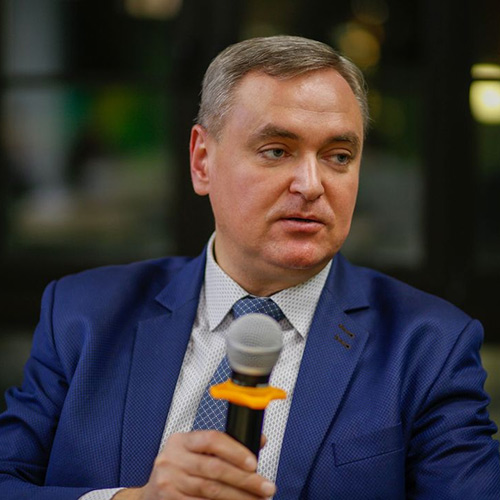
Dmytro Olefir – Junior Research Fellow at the Institute of Electrodynamics of the National Academy of Sciences of Ukraine, expert in energy systems management and electricity market functioning, Deputy Director of Balancenergo LLC – optimization of the strategy for working in the electricity market, coordination of equipment modernization work, coordination of work on creating an aggregated group, participation in the GTU+BESS innovation project. Deputy Director of Energy Trade Group LLC – organized a business process for exporting/importing electricity, built models for distributed generation and BESS construction projects. Manages projects for automating BESS management and organizing an aggregated group for working in the electricity market.
Has several higher educations: diploma with honors in MBA – Institute of Business Education, Kyiv National Economic University of Ukraine named after V. Hetman; postgraduate studies in the specialty “Power Plants and Power Systems”, National Technical University of Ukraine (Kyiv Polytechnic Institute), diploma with honors in the specialty “Automation of Electrical Systems Control”, qualification as an electrical engineer – National Technical University of Ukraine (Kyiv Polytechnic Institute); bachelor’s degree in “Electrical Engineering”, NTUU (Kyiv Polytechnic Institute).
In 2022-2024 – member of the Supervisory Board of PrJSC “Zaporizhtransformator”. Restored the efficiency and profitability of the enterprise, developed proposals for the operation and development of the plant under martial law, improved corporate governance, control of the implementation of the Financial Statements and other documents.
In 2023 – member of the board of directors of PJSC “Centrenergo”. Implemented a new trading strategy in various segments of the electricity market and effective planning.
In 2022-2023 – Chairman of the Supervisory Board of JSC “Market Operator”. Approved the executive body in accordance with the current regulatory framework of Ukraine and the Charter of the Company, approved the financial plan of the Company for 2023 and conducted an audit.
In 2021-2022, as an advisor to the General Director of JSC “Market Operator”, he developed proposals to improve the company’s work in the conditions of synchronization of the Unified Energy System of Ukraine with ENTSO-E.
As a member of the NSDC working group, he developed an action plan to overcome threats in the energy industry.
From 2018 to 2021, he headed the commercial department of PrJSC “Ukrhydroenergo”. He had the right to sign financial documents in the electricity market. In a short time, he organized the commercial activities of PrJSC “Ukrhydroenergo” in the new electricity market (recruitment, software, regulations for interaction with divisions, finalization of the regulatory framework for the operation of the electricity market (interaction with the National Commission for the Regulation of Energy and Utilities of Ukraine, NEC “Ukrenergo”, Ministry of Energy, Cabinet of Ministers of Ukraine, JSC “Market Operator”, LLC “UEB”, market participants, USAID).
In 2021, according to the results of the competition, by order of the Cabinet of Ministers of Ukraine, he was approved for the position of a member of the Board of Directors of NEC “Ukrenergo”.
He has experience in cooperation with the American company GESS Ukraine. He prepared a Feasibility Study for the reconstruction of the Kherson CHPP with its conversion to biogas operation.
2014-2023 – Corresponding Member of the Academy of Technological Sciences of Ukraine. He participated in the activities of the Academy of Technological Sciences of Ukraine, is the author of scientific and practical articles, reports at energy forums, and developed a proposal for the implementation of international standards in in the field of power systems management and information support in the power sector of Ukraine, the functioning of the electricity market.
In 2013 – 2021 – an individual member of the NGO “CIGRE-Ukraine”, its presentations at the international level.
Has many years of experience in interacting with the National Commission for the Regulation of Energy and Power Generation of Ukraine, the Ministry of Energy, the Cabinet of Ministers of Ukraine, the World Bank, research institutes, USAID, generating companies and DSOs, European TSOs and SOs of the CIS and Baltic countries, international and Ukrainian consulting companies, international software developers, experience in scientific and teaching activities, management of large teams (over 2.5 thousand employees); impeccable business reputation; significant experience as a risk manager.
Lecture content
- The concept of an energy system
- Energy system components
- Principles of organization and functioning of the electric power system as a component of the energy system
3.1. Prerequisites for the unification of national electric power systems into an energy union
3.2. Modern structure of the electric power system
- Generation
4.1. Traditional generation
4.2. Alternative energy sources
4.3. Energy storage systems (BESS)
- Distributed generation and electricity transmission/distribution system
5.1. Distributed generation
5.2. Transmission system
5.3. Distribution system
- Operational dispatching control and power balance
- Technical equipment of the power system
- SMART GRID
- Ancillary services market and frequency regulation
- Preliminaries for unification of national power systems into power associations
- Active links (NPAs, standards, resources)
- Glossary
- Questions for self-testing
1. The concept of an energy system
Just three years ago, most of us did not think about what an energy system was: there is a light in the socket, the gas stove is working, the air conditioner is humming – and that’s it. However, the situation changed dramatically after the start of the full-scale invasion of Russian troops into the territory of Ukraine. Missile and drone attacks on energy infrastructure, news about damage, queues at gas stations, power outages – and the topic of the energy system has become “everyday”.
The energy system (energy system) is a set of all types of energy resources, as well as methods and means of their production, transformation, transportation, distribution and use for a guaranteed supply of energy to consumers.
2. Components of the energy system
The energy system is a large organism. It combines resources and processes: from the extraction and transportation of energy carriers to production and consumption.
Components of the energy system:
- electric power system;
- oil and gas complex;
- coal industry;
- nuclear energy;
- new directions – hydrogen and renewable energy.
Combined, they form the United Power System of Ukraine (UPS).
Local systems are connected to regional systems (at the level of several regions), then to the united power system of the country, and several countries to the energy association. The power systems of European countries are united in ENTSO-E (European Network of Transmission System Operators for Electricity) and ensure transnational electricity trade.
Nuance of terms. There are certain gaps in the legislative field of Ukraine. For example, the Law of Ukraine “On the Electricity Market” defines the term “Unified Energy System of Ukraine” (hereinafter – Unified Energy System of Ukraine) – “a set of power plants, electrical networks, other electric power facilities that are united by a common mode of production, transmission and distribution of electric energy with centralized management of this mode“. If we consider the interpretation of this term literally, then the Law applies only to the electric power industry as a component of the energy sector as a whole and gives its interpretation.
Briefly about ENTSO-E and Ukraine’s integration
ENTSO-E (English: European Network of Transmission System Operators for Electricity) is a European network of electricity transmission system operators, uniting 43 operators in 39 countries of the European continent.
The full-scale invasion caused a rapid transition to synchronous operation of the Ukrainian power system with the energy association of European countries. March 15, 2022 The Unified Energy System of Ukraine synchronized with ENTSO-E. December 14, 2023 NPP Ukrenergo became a full member of the Association of European Network of Electricity Transmission System Operators ENTSO-E. It is about technical reliability, mutual assistance and the European market.
3. Principles of organization and functioning of the electric power system as a component of the energy system
I would like to further focus on the electric power system, because, in my opinion, it is the most complex among other components of the energy system.
Why is it complex? There are several reasons.
The first is energy storage. Until recently, the electric power system did not have the ability to store electricity in sufficient quantities. Of course, someone can say that there are three pumped storage power plants in Ukraine. However, they do not fully meet the needs of the Ukrainian energy system and depend, among other things, on the hydrological regime of the Dniester, Bug and Dnipro rivers. But scientific and technological progress does not stand still. There is currently a boom in constructionof electricity storage systems, the so-called BESS — Battery Energy Storage Systems, and this is a step into the future, because if energy companies can ensure electricity storage in sufficient volumes to balance the needs of the energy system, it will be better and easier for both the country’s energy system and the state as a whole.
The second is the “green” transformation. The global trend of transition to “clean”, green energy. The world is moving away from burning coal, gas, and fuel oil and is gradually moving towards renewable technologies.
Of course, there are countries that cannot yet abandon coal. For example, in India, huge investments are currently being made in coal generation. It is planned to build more than 30 GW of new capacity in the coming years. In the USA, we see a different situation: they are betting on their own oil and gas, and at the same time reducing plans for wind generation. That is, each country proceeds from its own resources and priorities. Each country has its own realities.
Third – demand from IT and AI. The development of artificial intelligence is sharply increasing the demand for electricity. It is a huge consumer of electricity. Today, renewable sources do not have time to cover the growing needs of such industries. Therefore, the “green” transition will most likely continue, but more carefully: with an eye on the real needs and capabilities of economies.
Conclusion for Ukraine. We need a balanced and far-sighted strategy for the development of the electric power industry. It should be built carefully and rationally, taking into account available resources and capabilities, potential threats and the need to balance reliability, uninterrupted supply and the cost of technologies. Ukrainian experience has proven: the electric power industry is no longer just a branch of the economy, but a key element of national security. Power system strikes mean mass outages, production shutdowns, and serious problems for both domestic and industrial consumers.
3.1. Prerequisites for unifying national power systems into a power union
The question arises: why are power systems built at all and what do they consist of? Let’s look at a simple example. A private household has a diesel generator, or a windmill, or a solar station. It works well, but if the weather changes, night falls, or the generator breaks down or the cable is damaged, the house is dark.
That is why consumers began to be united into single networks long ago. So step by step, power systems were formed. And here another important point is the balance of power while maintaining quality. The most important parameter is the frequency. It must be maintained at 50 Hz. And for this, in real time, we must constantly maintain a balance between how much we produce and how much we consume.
Historical essay
- Late 19th century. The first power plant is launched in Kyiv – it illuminates Khreshchatyk and the theater.
- Post-war years. Capacity shortage – diesel power plants, small hydroelectric power plants, and plant block stations are operating.
- 1930s. Construction of the Dnieper hydroelectric power plant is a symbol of industrialization.
- Post-war reconstruction. Formation of the Unified Energy System.
- 1960s–1980s. Development of high voltages and nuclear power.
- Independence. Reforms, creation of the electricity market, gradual integration into Europe.
- 2022. Emergency synchronization with ENTSO-E.
- 2024. Ukrenergo becomes a full member of ENTSO-E.
3.2. Modern structure of the electric power system
- energy generating sources;
- transformer substations and power transmission lines (main and distribution);
- current collectors of electricity consumers;
- control centers that carry out coordinated work of all components of the electric power system;
- relay protection, emergency automation, automated control systems, telemechanics, telecommunication systems and commercial electricity metering, etc.
4. Generation
Types of generation:
- traditional, or “dirty” generation – uses fossil energy sources: coal, gas, fuel oil, nuclear fuel;
- alternative, or “clean”, “green” generation using renewable energy sources;
- energy storage facilities.
4.1. Traditional generation
Coal generation
Coal generation produces electrical and thermal energy using coal as a primary source. There are about 2,500 coal-fired power plants operating in the world today, accounting for approximately a third of the installed capacity of all generating facilities. At the same time, the Paris Climate Agreement provides for a gradual phasing out of this type of generation: developed countries must close theircoal plants by 2030, and developing countries by 2040. This means that in the next five years, about 120 GW of coal capacity will have to be reduced every year – an amount that no renewable or “clean” generation can quickly compensate for. Poland, as a member of the EU, plans to completely close its coal-fired power plants by 2030. Similar decisions have been made in other European countries.
The energy crisis that has been unfolding in Europe since 2022 has forced some countries to temporarily continue using coal. At the same time, India, on the contrary, is actively increasing coal generation and plans to further increase electricity production from this resource in the coming years.
Ukraine has been gradually losing coal generation since 2014, when the Zuivska and Starobeshivska TPPs and a number of mines in Donbas were shut down due to the occupation. After the start of full-scale aggression and massive missile and airstrike attacks, electricity production at coal-fired power plants has sharply decreased. In addition, Ukraine’s strategic course towards joining the European Union completely eliminates the prospects for the revival of this type of generation.
It can be assumed that the situation would be better if, over the past three decades, along with the modernization of generating capacities, modern filters to reduce harmful emissions had been systematically introduced. For example, Poland, back in the late 1990s and early 2000s, modernized its thermal power plants, ensuring their operation for at least 25 years and the ability to function in a single European energy space.
Gas generation
Gas-fired power plants, combined cycle and gas turbine plants
This type of generation, despite being traditional, will not decrease in the near future, but rather will grow. The reason is that even with the rapid development of renewable energy sources, they create significant challenges for maintaining the balance of power, especially during hours of daily consumption deficit.
For example, Germany plans to build 10 GW of new gas-fired power plants in the near future and reconstruct another 2.5 GW of existing capacity. Israel has commissioned several combined cycle power units of 630 MW in recent years, and Switzerland purchased eight gas turbines of 50 MW each in 2022. Thus, gas generation continues to develop. In particular, in Germany, it is planned that new stations will initially operate on natural gas, and later, when the appropriate technologies are developed, they will switch to burning hydrogen and other “clean” solutions based on renewable sources.
Gas turbine plants also demonstrate high efficiency: they are quickly put into operation, are characterized by maneuverability and well maintain the balance of power in the electric power system.
As for the United States, as the president of the country stated, generation based on fossil sources, in particular gas, will continue to develop.
According to experts, Ukraine has a well-developed infrastructure for transporting and storing natural gas. That is why the development of gas turbine and combined cycle plants is a promising direction, especially after the end of hostilities and the cessation of shelling of energy infrastructure.
Gas piston plants
Gas piston plants is a relatively new type of generation for Ukraine. Their active implementation began after the massive missile attacks on large power plants, when there was an urgent need to diversify energy sources and reduce the risks associated with the destruction of large energy facilities. It was then that gas-piston installations of small and medium capacity began to be put into operation – from several hundred kilowatts to 2.5 MW.
World experience shows that such installations are most often used to cover the base load of electricity and heat consumers. At the same time, they have technical limitations: the optimal operating mode is 50–90% of the installed capacity. Operation at lower levels (20–30%) or, conversely, at full capacity (100%) significantly reduces the equipment resource, causing the need for frequent major repairs. This actually eliminates the investment effect and extends the project payback period for decades.
In my opinion, in the first post-war years, gas piston units will really play an important role in maintaining not so much reserves as the power balance in the country’s power system. At the same time, there are problems. For example, NPP Ukrenergo calculates auxiliary services with a minimum discreteness of 1 MW. A gas piston unit with a capacity of 1–1.5 MW is not capable of providing such reserves. In addition, equipment of this type is designed to operate in the basic mode: if you turn it on and off several times a day, the unit’s resource will quickly run out.
Therefore, it can be predicted that gas piston units in Ukraine will be used mainly where they will already be operating at the time of the end of hostilities, and will perform the functionlocal baseload generation.
Nuclear generation
Nuclear power plants use nuclear fuel to produce electricity. At the end of the second quarter of 2024, there were 408 nuclear reactors operating in the world with a total capacity of about 367 GW. In Ukraine, nuclear generation provides almost 8 GW of capacity at three unoccupied nuclear power plants. There are six more power units at the Zaporizhzhia NPP, but, unfortunately, they are located in occupied territory.
The main advantage of nuclear power plants is the ability to operate in base mode 24/7, ensuring a stable and uninterrupted power supply. In addition, Ukrainian power units have the technical ability to provide primary frequency control services. For example, tests were once conducted at the Zaporizhzhia NPP that confirmed this ability.
At the same time, there is a significant difference with the practice of other countries. For example, in France, nuclear power units are able not only to operate in the base, but also regulate the daily load schedule and even provide frequency regulation, providing auxiliary services to maintain the power balance in the power system. This became possible thanks to other technological solutions that differ from those used in Ukraine.
There are also risks. In the event of an emergency shutdown of a Ukrainian nuclear power unit (which is usually a unit with a capacity of 1000 MW), a significant imbalance is created. If the power system operates in an isolated mode, this causes serious frequency fluctuations, which can activate emergency automation and lead to disconnection of consumers. If Ukraine operates synchronously with the European network, such emergency shutdowns cause deviations in balance flows in interstate connections with neighboring countries.
Therefore, the development of nuclear power in Ukraine remains critically important. But it should be done with an orientation towards new technologies — those that allow to change the power level in accordance with daily fluctuations in consumption and at the same time reduce risks to the stability of the energy system.
4.2. Alternative energy sources
Alternative energy sources are primarily renewable sources. These include solar energy, wind energy, geothermal, hydrothermal, aerothermal energy, wave and tidal energy, biomass, biogas from organic waste, etc. Today we are seeing a real boom in the construction of such generation — primarily solar and wind. But each type has its own nuances.
Hydropower.
Hydroelectric power plants (HPPs) and pumped storage power plants (PSPPs) operate on hydro resources. The difference between them is that after the operation of the hydroelectric power plant, the water simply flows downstream, and it is impossible to reuse it at the same station. Only if there is a cascade, the lower stations can receive this water again. PSPs have the advantage: they can pump water back into the upper reservoir during hours of surplus (for example, in the summer during the day, when there is a surplus of electricity in the system and prices are falling) and produce it during peak hours of evening or morning deficit. In my opinion, the potential of PSPs is very large – both in Ukraine and in the world. But there are also limitations: it all depends on hydro resources. In the spring, during floods, the stations can operate almost at full capacity, but in the summer there is not enough resources, and production has to be limited.
Solar energy.
Solar power plants are currently actively developing both in Europe and in Ukraine. At the beginning of the full-scale invasion, about 6.5 GW of solar power was operating in Ukraine. But solar power plants have a peculiarity: they do not generate electricity at night, operate unstable during morning and evening peak hours, and can instantly change power depending on cloudiness. In winter, output drops significantly.
Wind power.
Wind power plants operate more stably than solar power plants: they can generate at night. But here everything depends on the weather. If the wind suddenly disappears, large imbalances arise in the energy system. This directly affects the market: in Romania, for example, on windy days, prices on the “day-ahead” market fall to almost zero, and when the wind dies down, prices rise sharply again. Currently, on average in Europe, wind provides about 17% of demand, and in countries such as Denmark, the United Kingdom, or Germany — even more.
Bioenergy.
Biogas power plants have a great advantage: they can operate around the clock, regardless of the weather or time of day. The only factor limiting their development is the availability of raw materials. But it is precisely such plants that are able to maintain balance during night and winter hours.
Biofuel thermal power plants are also promising, but they definitely require modern systems for cleaning harmful emissions.
Hydrogen generation.
This is a new direction, but with enormous potential. A scenario is already being considered that a significant part of the world’s gas power plants will gradually switch to hydrogen. This applies to transport, industry, energy, and even utilities. That is, we are talking about the transformation of the entire economy.
4.3. Energy storage systems (BESS)
Energy storage installations are worth mentioning separately. They allow you to accumulate cheap electricity during hours of surplus and release it during peak hours, when it is most expensive. Thanks to this, the power system operates more stably, especially taking into account the development of RES. BESS technologies are becoming cheaper: now capital costs have fallen below $200 per kWh, and the prospects for development here are huge.
In summary, thermal power plants, nuclear power plants, hydroelectric power plants and hydroelectric power plants are still centralized generation. But renewable sources, bioenergy, hydrogen and BESS form a new stage that makes energy more flexible and sustainable.
5. Distributed generation and electricity transmission/distribution system
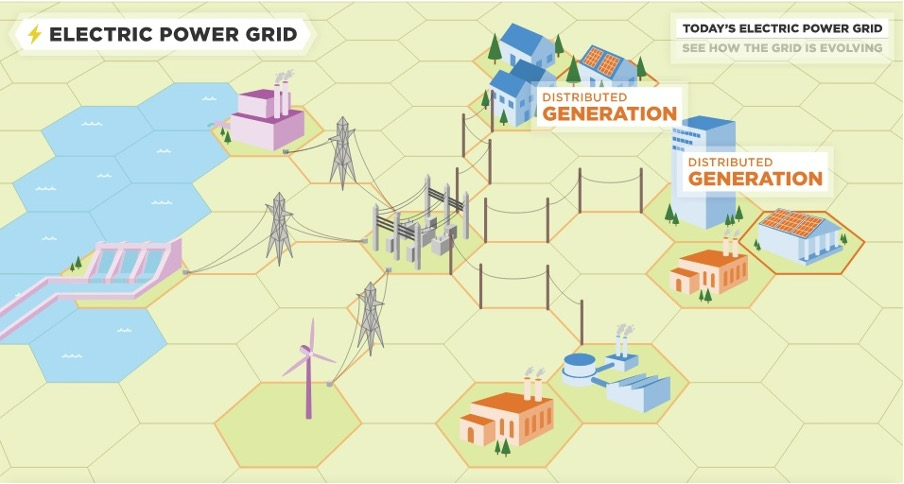
5.1. Distributed generation.
What is distributed generation? These are power plants with a capacity of up to 20 MW, which are connected not to the main grid, but to the electricity distribution systems. That is, these are relatively small installations that operate closer to the consumer.
There is also the concept of distributed energy production. This is a concept where many consumers build their own sources of thermal or electrical energy for their own needs, and feed the surplus into the grid – electrical or thermal. If we add to this also batteries, energy storage and conversion systems, then together we call everything distributed energy resources (DER).
Distributed generation facilities can be seen just “nearby”:
- on the roofs of private households (solar panels),
- near industrial consumers (gas piston stations, small wind turbines),
- in the form of micro-hydroelectric power plants or even emergency diesel generators.
5.2. Transmission system.
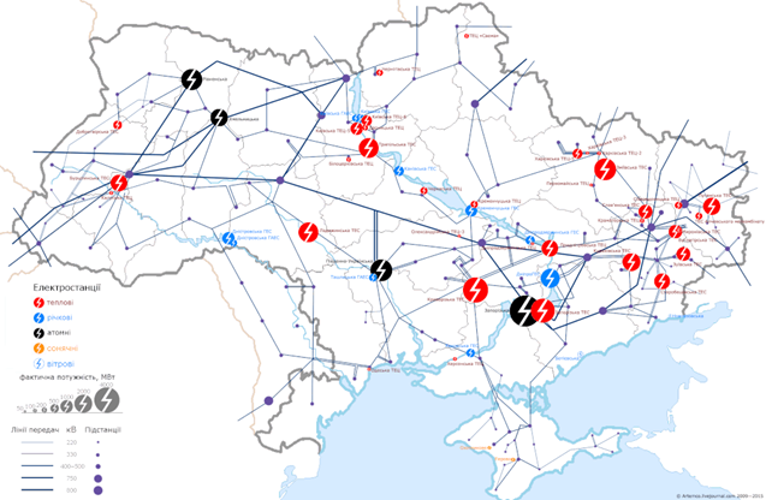
Now a few words about “main” networks. Their task is simple, but critically important: to transport electricity from large power plants to distribution systems or directly to large consumers.
In Ukraine, the transmission system is power lines and substations 220–750 kV, as well as interstate power lines.
5.3. Distribution system.
Next, electricity is already “distributed to homes and factories” thanks to distribution systems. They operate at lower voltage levels – 150 kV and below. Through them, electricity comes both from main networks and from small power plants that are directly connected.
6. Operational dispatching control and power balance
Centralized control of the joint mode of production, transmission, distribution and consumption of electrical energy is called operational dispatching control.
But before talking about dispatchers, let’s remember about power balance. To simplify, imagine a car moving along a highway at a speed of 100 km/h. You press the gas pedal – the car accelerates, the brake – it stops. Now let’s replace the car with a power system. The “gas pedal” here is generation, the “brake” is the load, that is, consumers. And the driver in this analogy is the dispatcher. It is he who keeps the system under control: he makes sure that the frequency remains at the desired level, that the flows along interstate lines are within limits, and that production and consumption are balanced.

Frequency is one of the main parameters of power quality.
The Transmission System Code (Resolution of the National Commission for the Regulation of the National Energy Regulatory Commission) sets out clear requirements:
- nominal frequency — 50 Hz;
- permissible deviation — ±50 MHz;
- maximum instantaneous deviation — 800 MHz;
- maximum steady deviation — 200 MHz;
- restoration time after a disturbance — 15 minutes;
- time to inform other operators of the synchronous area — 5 minutes;
- maximum permissible time outside the normal range — 15,000 minutes per year.
Dispatcher control hierarchy
In Ukraine, as in in the world, dispatching is built on a hierarchical principle:
- National level — the main dispatcher of NPC Ukrenergo. He is responsible for the entire transmission system and generation of more than 20 MW.
- Regional level — dispatchers of regional centers. They coordinate the work of substationsntions, transmission lines, generation and interact with distribution operators.
- DSR level (distribution system operators) — here dispatchers already ensure the delivery of electricity to the end consumer, support operating modes and eliminate accidents.
- Lower level — dispatchers at the power plants themselves, substations and in district networks.
That is why the Law of Ukraine “On Electric Energy” fixed the limit of 20 MW for distributed generation: everything that is more is subordinated to the transmission system operator, everything that is less is under the control of the DSR.
7. Technical equipment of the power system
A modern power system is not only generators and power transmission lines. It is also a whole complex of technical tools that allow dispatchers to see the situation, make decisions and ensure safety.
Main elements:
- SCADA — a data collection and processing system that informs the dispatcher and helps him make informed decisions regarding the operation mode of the power system.
- CR SARChP UES of Ukraine (AGC — automatic generation control) — an automatic generation control system that maintains the balance of power and frequency.
- Relay protection and emergency automation — the “insurance” of the system that is triggered in the event of accidents and prevents their spread.
- ACS TP of power plants and substations — automated process control systems.
- ASKOE — an automated commercial electricity metering system.
- SMART GRID — a new generation smart power system.
8. SMART GRID
“Smart grid” is an electrical system that includes:
- smart meters and “smart consumers”;
- renewable energy sources;
- storage systems;
- demand response tools;
- digital control of electricity parameters.
In essence, it is an electronic brain that manages energy production and distribution, making the system flexible and efficient.
On October 14, 2022, the Government of Ukraine adopted the Concept for the Implementation of SMART GRID by 2035 (with the support of the World Bank). The document lays the foundation for the transition to modern principles of the energy system.
Why is this important for Ukraine
Currently, during emergency shutdowns, all consumers connected to one transformer substation switch are disconnected from the network. Distributed generation also “flies out” along with them — solar panels, wind turbines, diesel generators. SMART GRID changes the logic: only the load (consumers) is disconnected, but generation remains in the network. This is a complex but extremely promising system.
Main components of SMART GRID
- distribution automation;
- network management software;
- smart meters;
- integration of RES, energy storage and electric vehicles (EV);
- demand response mechanisms;
- communication infrastructure;
- cybersecurity measures;
- microgrids.
9. Ancillary services market and frequency regulation
In Ukraine, the ancillary services market has been actively developing in recent years, especially after the auctions held at the Ukrenergo NPP. It is these services that allow maintaining the stability of the power system — primarily frequency.
Primary regulation
- This is a decentralized regulation performed by all generators certified to provide frequency maintenance reserves.
- The system works automatically: if the frequency decreases, the units increase power; if the frequency increases, the units reduce load.
- Reaction time is up to 30 seconds.
Secondary regulation
- Can be carried out automatically or in manual mode.
- In automatic mode, the central regulator of NPP Ukrenergo operates:
receives data on frequency, flows, load;
generates commands and sends them to power plants via secure channels.
- In manual mode, the dispatcher transmits commands by phone with mandatory recording in the software complex.
Tertiary regulation
- In EU countries (for example, Poland), it is organized automatically: every 15 minutes, the system issues tasks to stations to restore primary and secondary regulation reserves.
- In Ukraine, tertiary regulationThe switching is still carried out manually — through the dispatcher’s commands.
What services does the system operator purchase
On the auxiliary services market, NPC Ukrenergo purchases:
- frequency maintenance reserves,
- frequency restoration reserves,
- frequency replacement reserves.
In addition, to ensure the reliability and quality of power supply, the following services are purchased:
- voltage and reactive power regulation;
- restoration of the functioning of the Ukrainian power system after a complete blackout (the so-called “black start”).
If the generating source is capable of operating without external power supply and starting electricity into a de-energized network, it receives payment for this ability as an ancillary service.
10. Prerequisites for the unification of national power systems into power associations
Technical prerequisites:
- providing emergency assistance in case of emergencies;
- increasing the reliability of power grids;
- creating a technical opportunity for cross-border electricity trade (export/import).
Example: after massive missile attacks in 2022–2024, it was the power systems of European countries that provided emergency assistance to Ukraine, maintaining the stability of its power system during generation outages.
Economic prerequisites:
- lowering the cost of electricity at certain hours of the day due to the shift of peaks of the daily load schedule between different countries.
Prospects for the development of electric power systems
- Development of renewable energy sources (RES).
- Increase in the volume of energy storage installations (BESS).
- Construction of new and reconstruction of existing gas power plants with the possibility of using hydrogen as a primary fuel instead of natural gas in the future.
- Development of nuclear generation with the use of modern technologies and the ability to quickly load changes (small modular reactors, fusion, etc.).
- Implementation of SMART GRID technologies and large-scale modernization of electricity networks.
- Demand management and dissemination of energy-efficient technologies.
- Development and improvement of electricity markets.
It is expected that changes will be introduced to the market rules. Price indicators will apply to all categories of consumers without exception. This means that:
- a consumer who wants to use unlimited electricity will pay for it at market prices;
- a consumer who wants to reduce costs must participate in maintaining the energy system: reduce consumption during peak (deficit) hours and transfer it to periods of surplus, when electricity prices are lower.
Active links to Ukrainian legislation, standards, EU acts and resources
- Law of Ukraine “On the Electricity Market” No. 2019-VIII (13.04.2017). Official database of the Verkhovna Rada.
- Transmission System Code (NCRECP, Resolution No. 309 of 14.03.2018) – current version and amendments (including requirements for frequency quality and reserves)
- Distribution Systems Code (NCRECP, Resolution No. 310 of 14.03.2018) – current version and amendments (including requirements for frequency quality and reserves) https://zakon.rada.gov.ua/laws/show/v0310874-18#Text
- Amendments to the Distribution Systems Code (NCRECP, Resolution No. 550 of 15.04.2025) https://www.nerc.gov.ua/acts/pro-zatverdzhennya-zmin-do-kodeksu-sistem-rozpodilu-10
- On approval of the Rules of the retail electricity market (NKREKP No. 312 of 14.03.2018).
https://zakon.rada.gov.ua/laws/main/v0312874-18?utm_source=chatgpt.com#Text - On approval of the Concept for the implementation of “smart grids” in Ukraine until 2035 (CMU No. 908-р dated 10/14/2022) https://zakon.rada.gov.ua/laws/show/908-2022-р#Text
- Roadmap (Ministry of Energy, 05/19/2024). https://www.kmu.gov.ua/news/verkhovna-rada-skhvalyla-vprovadzhennia-pravovoho-pidgruntia-dlia-rozvytku-rozumnykh-merezh-v-ukraini-minenerho
- Draft National Energy and Climate Plan of Ukraine 2025-2030https://me.gov.ua/Documents/Detail?lang=uk-UA&id=f7088035-142e-4912-9aa0-6fe2def80c1b&title=ProektNatsionalnogoPlanuZEnergetikiTaKlimatuUkraini2025-2030
- Directive (EU) 2019/944 of the European Parliament and of the Council of 5 June 2019 on common rules for the internal market in electricity https://eur-lex.europa.eu/legal-content/EN/TXT/PDF/?uri=CELEX%3A32019L0944&utm_source=chatgpt.com
- Regulation (EU) 2019/943 of the European Parliament and of the Council of 5 June 2019 on the internal market in electricityhttps://eur-lex.europa.eu/eli/reg/2019/943/oj/eng?utm_source=chatgpt.com
- ENTSO-E Policy on Load-Frequency Control and Reserves. https://eur-lex.europa.eu/eli/reg/2019/943/oj/eng?utm_source=chatgpt.com
- ENTSO-E on Ukraine/Moldova synchronization (March 16, 2022). https://www.entsoe.eu/news/2022/03/16/continental-europe-successful-synchronisation-with-ukraine-and-moldova-power-systems/?utm_source=chatgpt.com
- Ukrenergo – ENTSO-E member: https://www.entsoe.eu/news/2023/12/14/ukrainian-transmission-system-operator-npc-ukrenergo-joins-entso-e-as-new-member/?utm_source=chatgpt.com
Additional materials / videos
- ENTSO-E (explanatory materials): mission, role of TSO and integrated market. https://www.entsoe.eu/about/inside-entsoe/objectives/?utm_source=chatgpt.com
- ENTSO-E Member Companies https://www.entsoe.eu/about/inside-entsoe/members/
- Introduction to ENTSO-E and the European energy system (analytical reviews/lecture videos ENTSO-E and EC). Eepublic Downloads
- Distributed Electricity Generation and Its Environmental Impacts https://www.epa.gov/energy/distributed-generation-electricity-and-its-environmental-impacts